
Chicago Property Tax Records
Chicago property tax records are managed by Cook County, not the City of Chicago itself. All property tax bills, assessed values, and payment records for Chicago addresses go through the Cook County Treasurer and Assessor offices. With over 2.7 million residents, Chicago makes up more than half of Cook County's population and accounts for a large share of its property tax base. You can search any Chicago property tax record online for free using a Property Index Number or street address through Cook County's web portals.
Chicago Property Tax Quick Facts
How Chicago Property Taxes Work
Property taxes in Chicago follow the same Cook County system that applies to every city and town in the county. The Cook County Assessor sets the value of each parcel. The county clerk applies tax rates from all local taxing districts. Then the Cook County Treasurer sends out bills and collects payments. Chicago has some of the highest property tax rates in the state because the city has many overlapping taxing bodies, including Chicago Public Schools, the Chicago Park District, and the Metropolitan Water Reclamation District.
Chicago residential properties are assessed at 10% of fair market value. Commercial and industrial parcels get assessed at 25%. This is different from the rest of Illinois, where the standard rate is 33.33% under 35 ILCS 200. The lower residential rate in Cook County does not mean lower taxes. It just changes how the math works. Tax rates adjust to raise the amount each district needs.
Bills come out in two installments each year. The first is usually due in March. The second is due in August. These dates can shift from year to year. If you miss a due date, a penalty of 1.5% per month kicks in on the late amount. That penalty applies to all unpaid Chicago property taxes under state law.
Search Chicago Property Tax Records Online
The best place to start is the Cook County Property Info portal. This site combines data from the treasurer, assessor, and clerk into one search tool. Type in a Chicago address or PIN, and you get the full tax history for that parcel. You can see billed amounts, payment status, exemptions, and assessed values. The tool is free and does not need an account.
The Chicago city government also provides some property tax help through its Department of Finance at 121 N LaSalle St, Chicago, IL 60602. You can reach them at 312-744-9100. The city finance office handles water bills and other city fees but does not manage property tax bills directly. For all property tax matters, Cook County is where you need to go.
The screenshot below shows the Chicago city website finance page, which links to useful Cook County resources for property tax records.
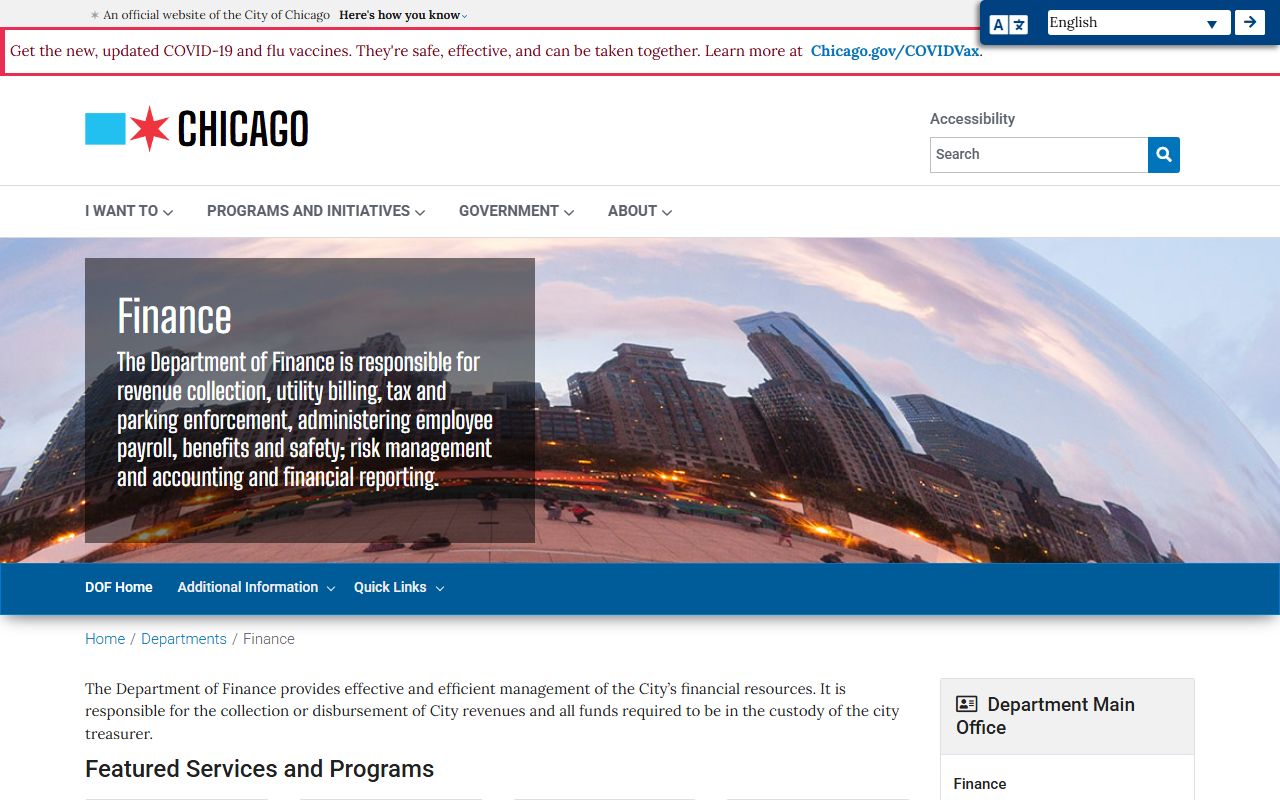
From there, the city can point you to the right Cook County office for your needs.
Cook County Treasurer and Property Tax Payments
The Cook County Treasurer (Maria Pappas) handles all property tax payments for Chicago. The office is at 118 N. Clark Street, Room 112, Chicago, IL 60602. Call 312.443.5100 for the automated payment system. You can pay online, by mail, at a bank, or in person. E-check payments are free through the treasurer website. Credit card payments carry a fee.
The treasurer site also shows payment history for any Chicago property. You can look up past bills, see which ones were paid, and check for any outstanding balances. If taxes are unpaid for too long, the county sells the tax debt at an annual tax sale. The property owner then has a redemption period (usually 2 to 3 years) to pay back the debt with interest. All of this creates records you can search on the treasurer site.
Chicago Property Assessments and Appeals
The Cook County Assessor's address search tool lets you look up the assessed value of any Chicago property. Assessor Fritz Kaegi runs this office at 118 N. Clark St., Third Floor, Chicago, IL 60602. Call 312.443.7550 with questions. The assessor's site shows the property description, lot size, building details, and current assessed value.
If you think your assessment is wrong, you can appeal. The first step is filing with the Cook County Board of Review. After that, you can take it to the Illinois Property Tax Appeal Board if needed. Under 35 ILCS 200, property owners have the right to challenge their assessed value. This matters in Chicago because even a small change in your assessed value can save or cost you a lot of money given the city's high tax rates.
Assessment appeals have deadlines. You need to check the Board of Review schedule for your township. Chicago falls within several townships for assessment purposes, and each one opens on a different date. Miss the window, and you wait another year.
Chicago Property Tax Exemptions
Several exemptions can lower your Chicago property tax bill. The most common is the Homeowner Exemption, which reduces the assessed value of your primary home by up to $10,000 in Cook County. The Senior Citizen Exemption gives an extra $8,000 reduction for homeowners 65 and older. There is also a Senior Freeze that locks the assessed value in place for qualifying seniors with low income.
Other exemptions include those for veterans, disabled persons, and long-term homeowners. You can check what exemptions are on a property by looking it up on the Cook County Property Info site. If you think you qualify for an exemption you are not getting, contact the assessor's office. Exemptions show up in your property tax records and directly affect how much you owe each year.
Understanding Your Chicago Tax Bill
A Chicago property tax bill lists every taxing district that gets a share of your payment. Most Chicago homeowners pay into a dozen or more districts. Chicago Public Schools takes the biggest piece. The city itself, Cook County, the park district, and various special districts each take a cut. Your bill shows the rate for each one and how much you owe to each district.
The bill also shows your PIN, assessed value, equalized assessed value, and any exemptions. Under 35 ILCS 200, the equalization factor (sometimes called the multiplier) adjusts Cook County assessments so they line up with the state average. This factor changes each year and is set by the Illinois Department of Revenue. It affects every Chicago property tax bill. You can find the current year's factor on the IDOR property tax page.
Getting Help with Chicago Property Taxes
The Cook County Treasurer holds outreach events in Chicago where you can get help with your property tax bill. Staff will check if you are getting all the exemptions you qualify for. The treasurer's site lists event dates and locations. These events are free and open to all Chicago property owners.
For legal help, several organizations in Chicago offer free property tax advice. The Illinois Property Tax Public Inquiry site is another good resource for looking up tax info across the state. You can search by name, address, or PIN to find Chicago property tax records and compare them to other areas.
Cook County Property Tax Office
All Chicago property taxes are handled by Cook County. Visit the Cook County page for full details on the treasurer, assessor, clerk, and Board of Review offices that manage Chicago property tax records.
Nearby Cities
These cities are near Chicago and also have property tax records handled by Cook County or neighboring counties.