
Find Champaign County Property Tax Records
Champaign County property tax records are managed by the treasurer, chief assessment office, and county clerk in Urbana. The county provides a free online search tool where you can look up any parcel by owner name, address, or PIN. With more than 208,000 residents and home to the University of Illinois, Champaign County handles a large number of property tax records across a mix of urban and rural parcels. You can view tax bills, assessed values, payment status, and exemptions for any property. The treasurer's office is open Monday through Friday, 8 AM to 4:30 PM.
Champaign County Property Tax Quick Facts
Champaign County Property Tax Search Online
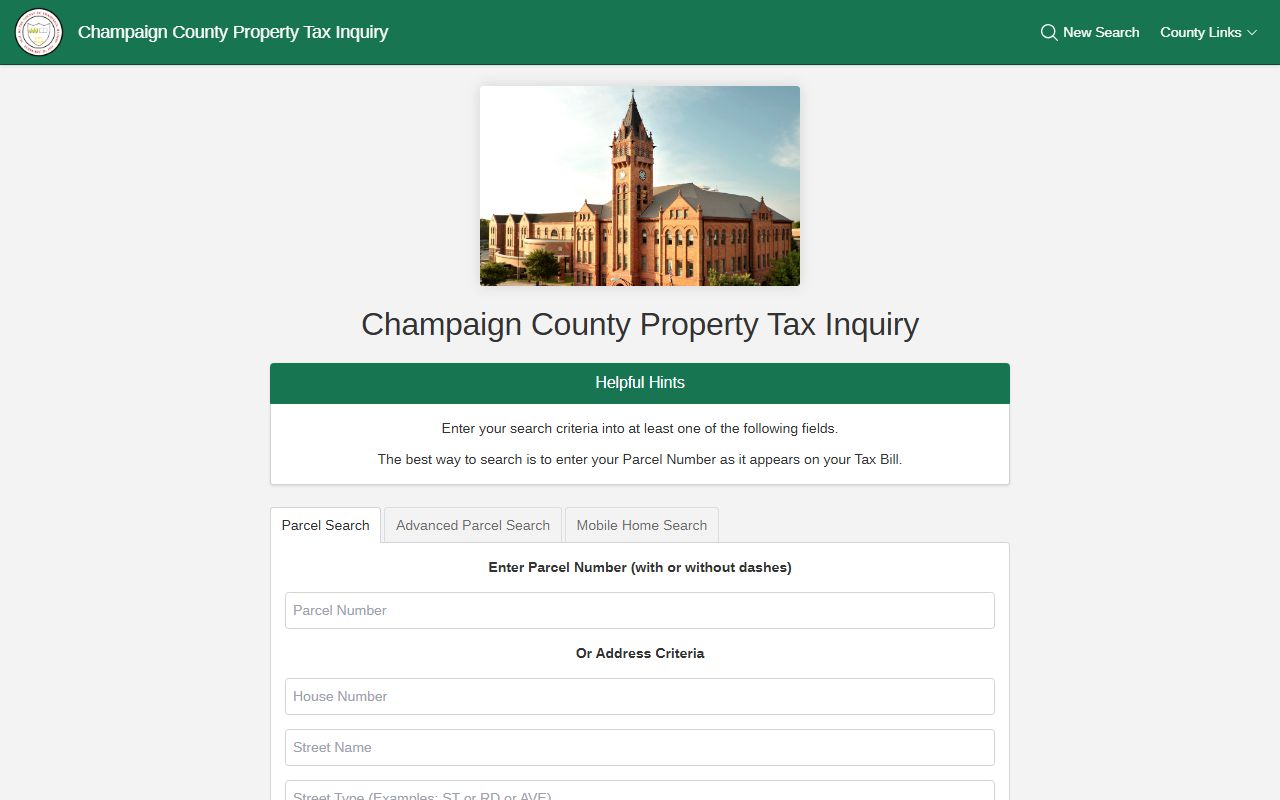
The best way to find Champaign County property tax records is through the Champaign County tax search portal. This tool lets you search by owner name, address, or parcel number. Results show the full tax bill, assessed value, payment history, and exemptions. The site is free and open to anyone without a login.
The Champaign County tax search portal shows bill amounts, assessed values, and payment details for all parcels across the county.
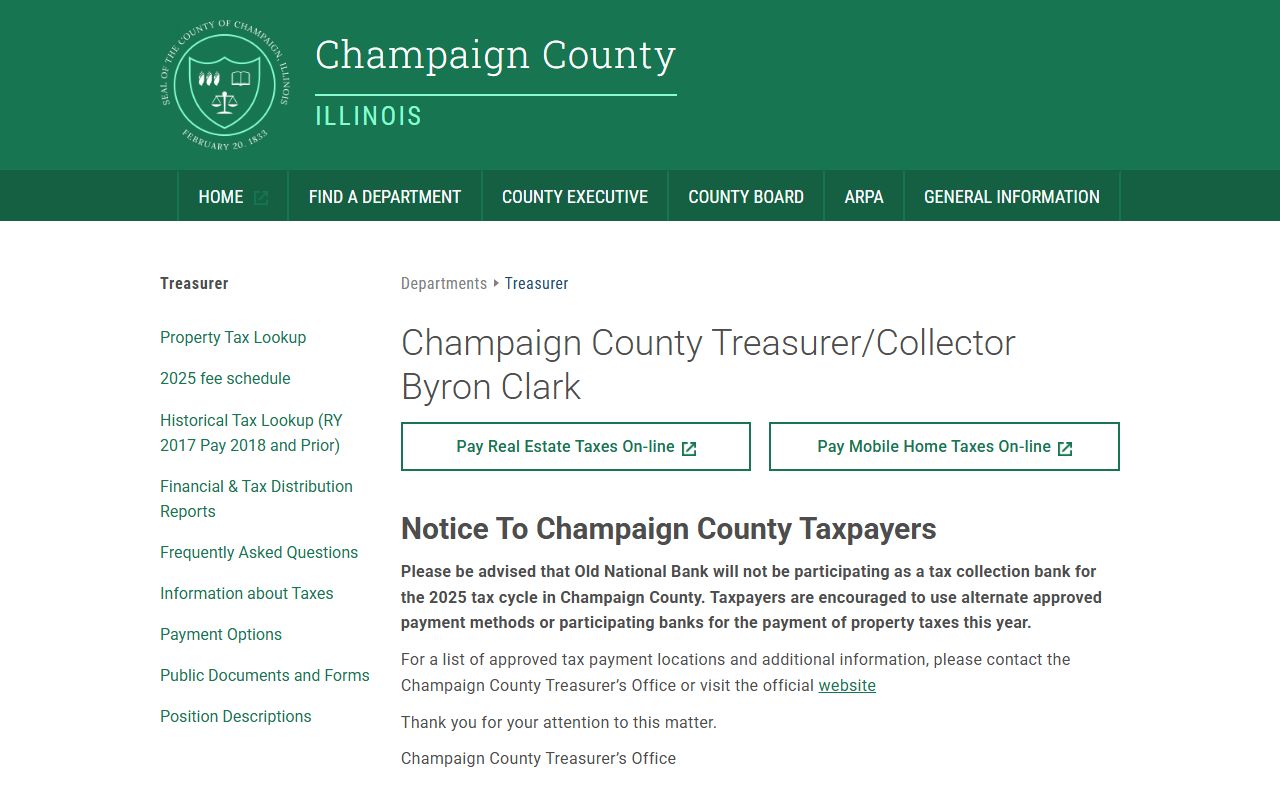
Champaign County Treasurer Byron Clark runs the office that collects property taxes. The treasurer's office is at 102 E Main Street, Urbana, IL 61801. Call 217-384-3743 with questions about your bill or payments, or email treasurer@champaigncountyil.gov. The office is open Monday through Friday from 8 AM to 4:30 PM. The Champaign County Treasurer page has details on payment options, due dates, and how to read your tax bill.
The Champaign County Treasurer page covers payment options, office hours, and key dates for property tax bills.
Champaign County Property Tax Assessments
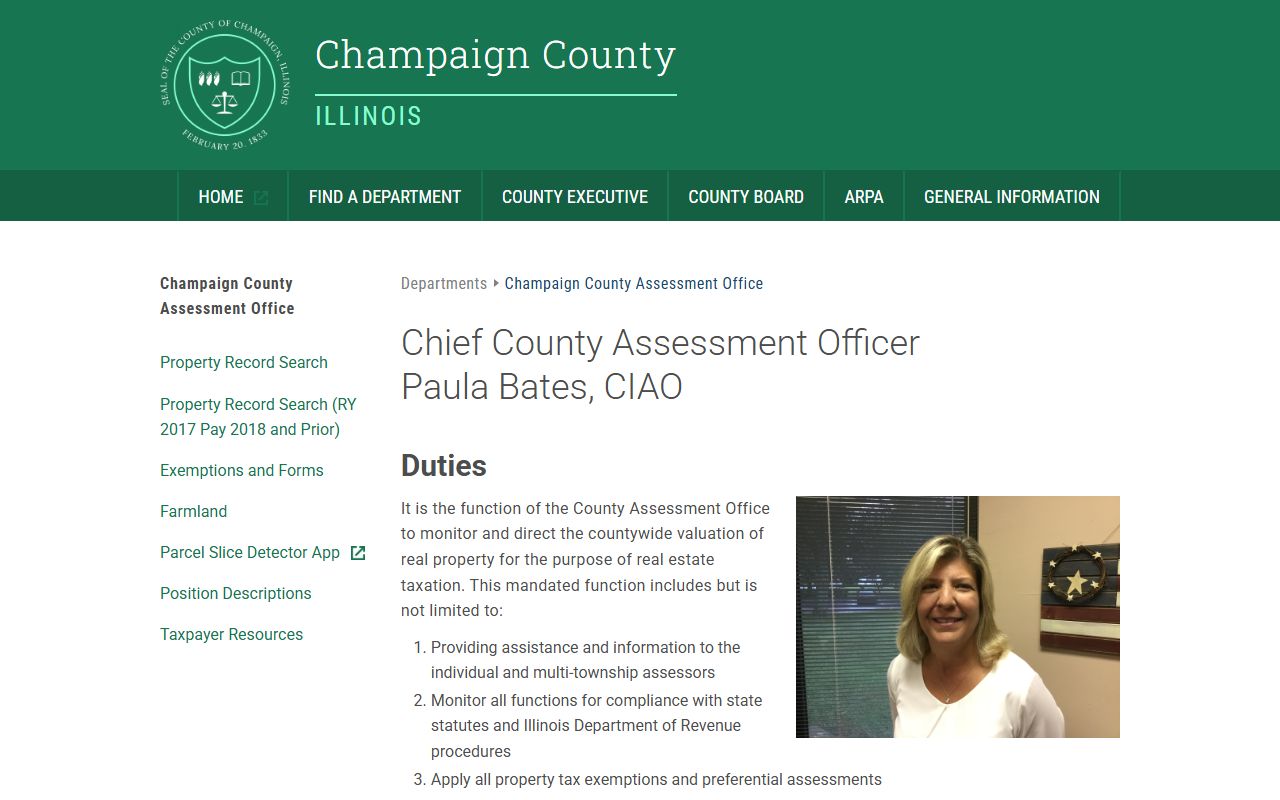
Paula Bates serves as the Chief Assessment Officer for Champaign County. The office is at the county building in Urbana. Call 217-384-3760 or email assessor@champaigncountyil.gov for questions about property values or appeals. The Champaign County Assessment Office page explains how property values are set each year and what forms you need for an appeal.
The Champaign County Assessment Office page outlines the valuation process and provides resources for property owners who want to challenge their assessment.
Under 35 ILCS 200, Champaign County assesses property at 33.33% of fair market value. A home worth $210,000 on the market would have an assessed value near $70,000. The state multiplier then adjusts that number to the equalized assessed value. Your tax rate gets applied to the EAV, not the full market price. Exemptions bring the EAV down further. The homestead exemption in Champaign County cuts up to $8,000 from the EAV for owner-occupied homes. Seniors get an additional $8,000. These exemptions are part of your Champaign County property tax records and show up on any search.
Champaign County Property Tax Due Dates
Champaign County property taxes come due in two installments. The first installment is due June 5. The second is due September 5. If you miss either date, interest starts on the unpaid amount right away. The annual tax sale is held on October 31, starting at 9 AM. Properties with unpaid taxes from prior years go to sale at that time.
You have several ways to pay your Champaign County property taxes. The treasurer accepts online payments by credit card or e-check. Credit and debit cards come with a 2.25% fee, with a minimum charge of $2.95. E-check payments cost just $0.95, which makes them the cheapest online option. You can also pay by mail or visit the office in person at 102 E Main Street in Urbana. The treasurer's office processes walk-in payments during regular hours, Monday through Friday, 8 AM to 4:30 PM.
Under Illinois law, unpaid property taxes accrue interest. If the taxes stay unpaid through the tax sale, investors buy the right to collect. The property owner gets a redemption period to pay the debt back, but the costs pile up with each month. All of these events get recorded in the Champaign County property tax records for the parcel. Paying on time is the simplest way to avoid any problems.
Champaign County GIS Property Maps
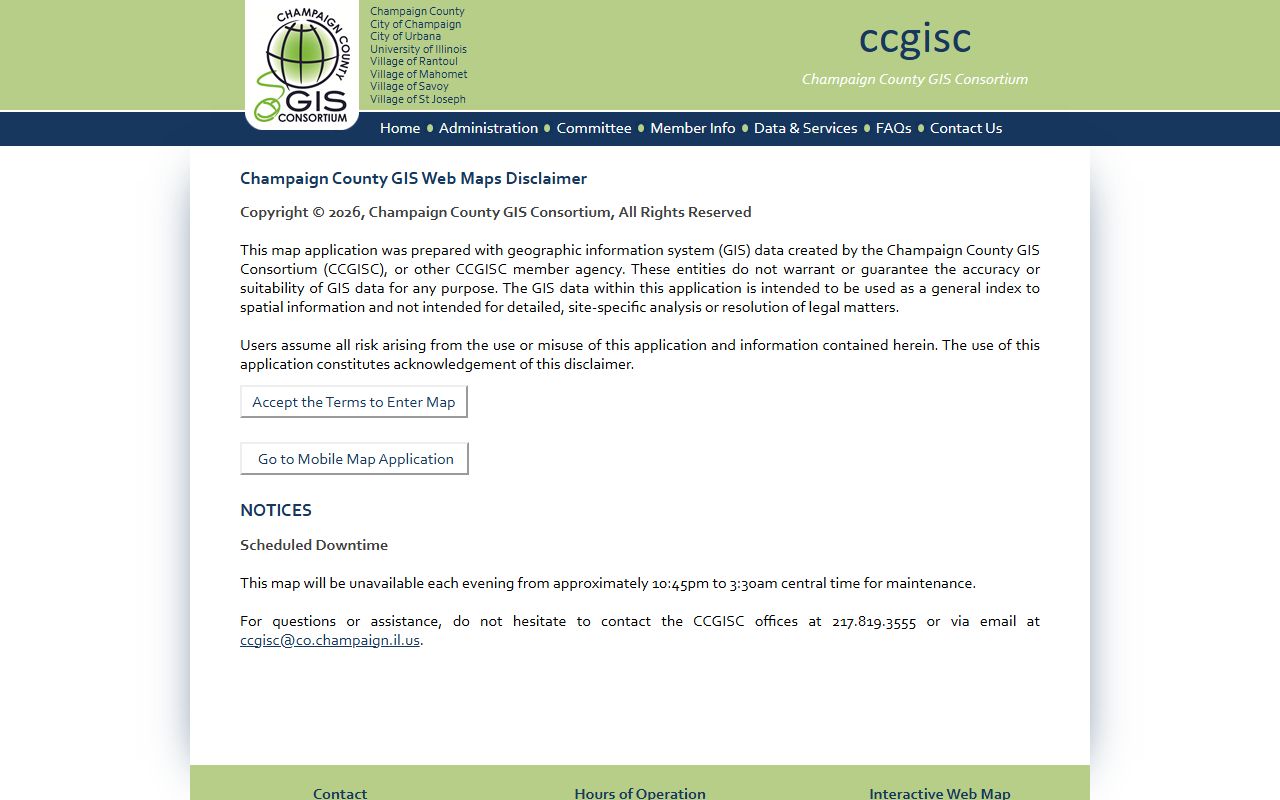
Champaign County maintains an interactive map tool at the Champaign County GIS Consortium. This map shows parcel lines, ownership data, and basic property details. You can click on any lot to pull up its information. The tool is helpful when you know the general location of a property but not the exact address or PIN.
The Champaign County GIS map displays parcel boundaries, owners, and links to assessment data for properties across the county.
Once you find a parcel on the GIS map, grab the PIN and use it on the tax search portal to pull up the full Champaign County property tax records for that property. The map and the tax portal work well together for finding any parcel in the county.
County Clerk and Recorded Documents
Champaign County Clerk and Recorder Aaron Ammons handles both the tax extension process and recorded documents. Call (217) 384-3720 for general questions. For property tax matters, use the dedicated line at (217) 384-3722 or email proptax@champaigncountyil.gov. The clerk's office takes the assessed values and applies the tax rates from each local district to calculate the final bill amounts in Champaign County.
Recording fees changed as of April 1, 2025. Standard documents now cost $70 to record. Non-standard documents run $82. These fees apply when filing new documents with the recorder. Searching existing Champaign County property tax records online through the tax portal remains free. The recorder's office also keeps deeds, mortgages, and liens on file. Tax liens from unpaid property taxes in Champaign County get recorded here and come up during title searches when property changes hands.
Cities in Champaign County
Champaign County includes the cities of Champaign, Urbana, Rantoul, and other communities. All property tax records are managed at the county level by the treasurer, assessment, and clerk offices in Urbana. Select a city below for local details about Champaign County property tax records.
Nearby Counties
These counties share a border with Champaign County. Make sure you are searching in the right county before looking up property tax records. Records are kept by the county where the property is located.