
Search Lake County Property Tax Records
Lake County property tax records are available through the county's online tax portal and at the treasurer's office in Waukegan. The county maintains records for over 714,000 residents across dozens of municipalities. You can search for tax bills, view assessed values, check payment status, and find exemption details for any property in Lake County using a PIN or address. The treasurer, chief county assessment officer, and county clerk each play a part in the tax cycle. Most lookups are free online, though certified copies may cost extra.
Lake County Property Tax Quick Facts
Lake County Property Tax Search Portal
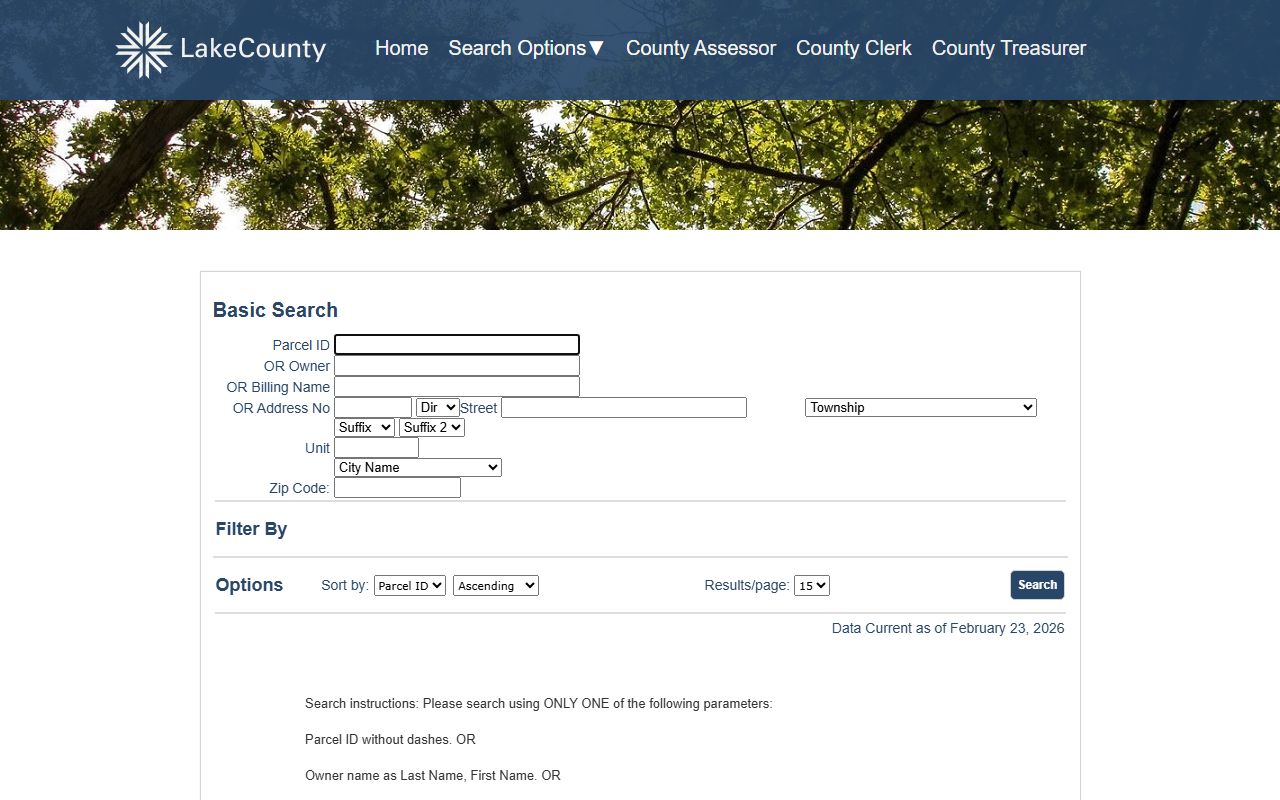
The primary tool for searching Lake County property tax records is the Lake County tax portal. This site lets you look up any property by PIN or address. You can see the current tax bill, past bills, payment history, and exemptions. The portal is free and does not need a login. It is the quickest way to check your Lake County property tax records from home.
Here is how the Lake County tax portal looks when you start a search for property tax records.
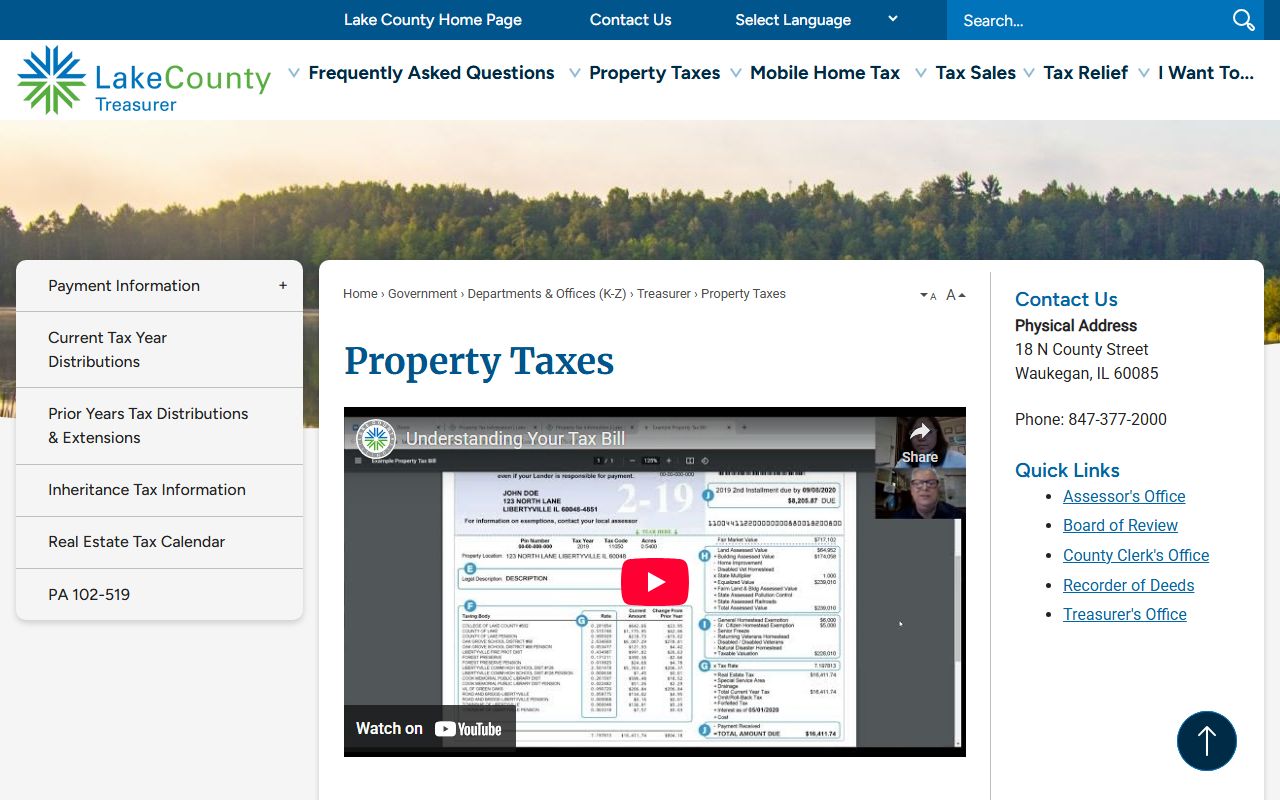
The Lake County Treasurer's office handles all tax collection. It is at 18 N County Street, Room 102, Waukegan, IL 60085. Office hours run Monday through Friday, 8:30 AM to 5:00 PM. Call (847) 377-2323 or email treasurer@lakecountyil.gov with questions about your bill or payment. The Lake County property taxes main page has a good overview of how the tax cycle works and links to all the key tools.
The Lake County property taxes page gives a broad view of the tax process and links to forms and payment options.
Lake County Property Tax Assessments
The Lake County Chief County Assessment Officer sets values on all property in the county. The office is at 18 N County Street, 7th Floor, Waukegan. Call (847) 377-2050 or email assessor@lakecountyil.gov for help. Under 35 ILCS 200, property in Lake County gets assessed at 33.33% of fair market value. The assessor looks at recent sales, property features, and market conditions to arrive at a value.
If you think your assessment is wrong, you can file a complaint with the Lake County Board of Review. The Board checks your evidence and can adjust the value. After that step, you can appeal to the Illinois Property Tax Appeal Board. These appeal records become part of your Lake County property tax records and stay in the assessor's system going forward. The assessment office also handles changes like new construction, demolitions, and property splits that affect how a parcel is valued.
Property Tax Exemptions in Lake County
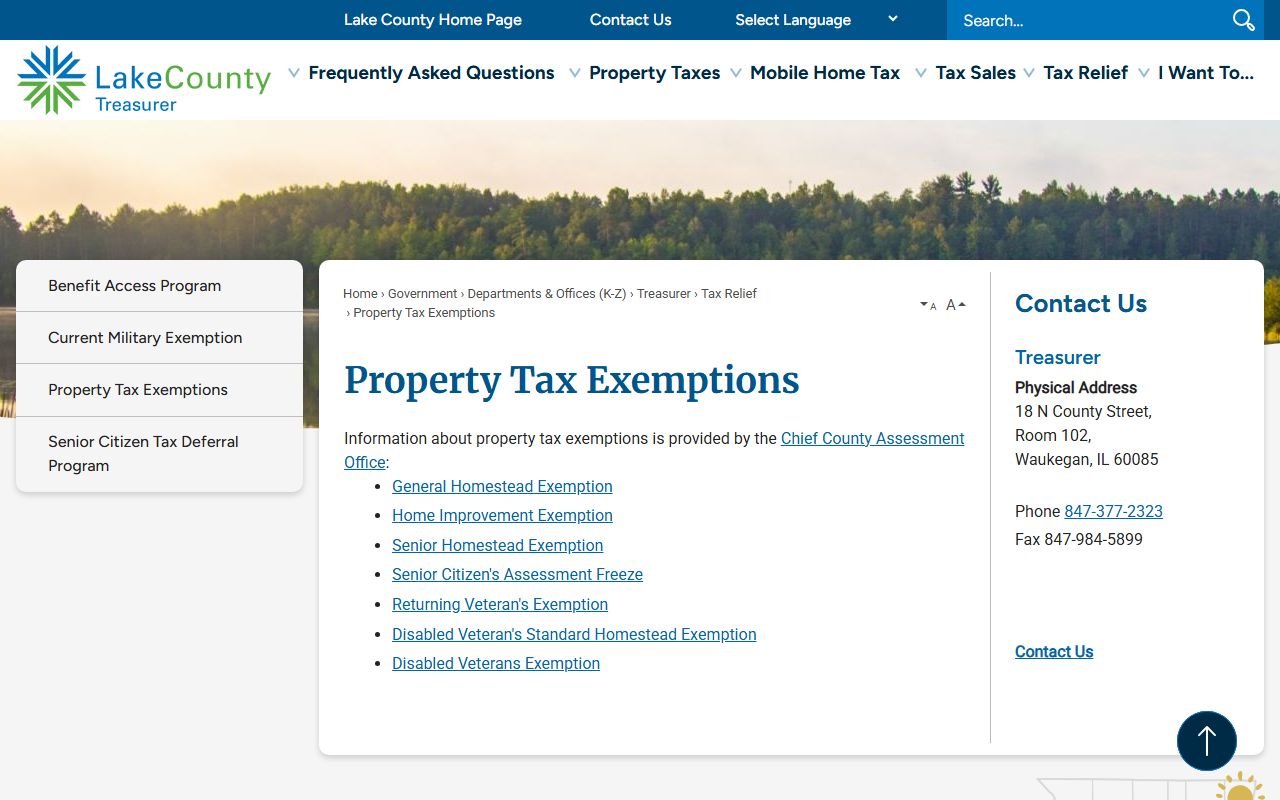
Lake County residents can apply for exemptions that lower their property tax bill. The Lake County property tax exemptions page lists all the options. The general homestead exemption is the most common. Senior citizens, disabled persons, veterans, and disabled veterans may get extra reductions. These exemptions appear in your Lake County property tax records once approved.
The Lake County exemptions page explains each type and how to apply for property tax reductions.
Exemptions in Lake County must be filed with the assessment office. Some renew each year on their own. Others need a new form. If you sell your home, the exemption does not transfer to the buyer. The new owner has to apply fresh. Under 35 ILCS 200, each exemption type has its own rules for who qualifies and how much it takes off the EAV. Missing the deadline means waiting another full year, so check the Lake County site early.
Paying Lake County Property Taxes
Lake County gives you four ways to pay. You can pay by mail, online, in person, or at a local bank. Online payments accept e-checks and credit cards. The treasurer's site shows your balance and lets you pay right away. Mailed payments go to the treasurer's office in Waukegan.
Late payments in Lake County cost 1.5% per month on the unpaid balance. That is 18% per year if you let it sit. The penalty is set under 35 ILCS 200 and applies the day after each due date. If taxes stay unpaid for more than a year, the property may go to the annual tax sale. Lake County property tax records will show any late charges or sale activity tied to a parcel.
Lake County Tax Sales
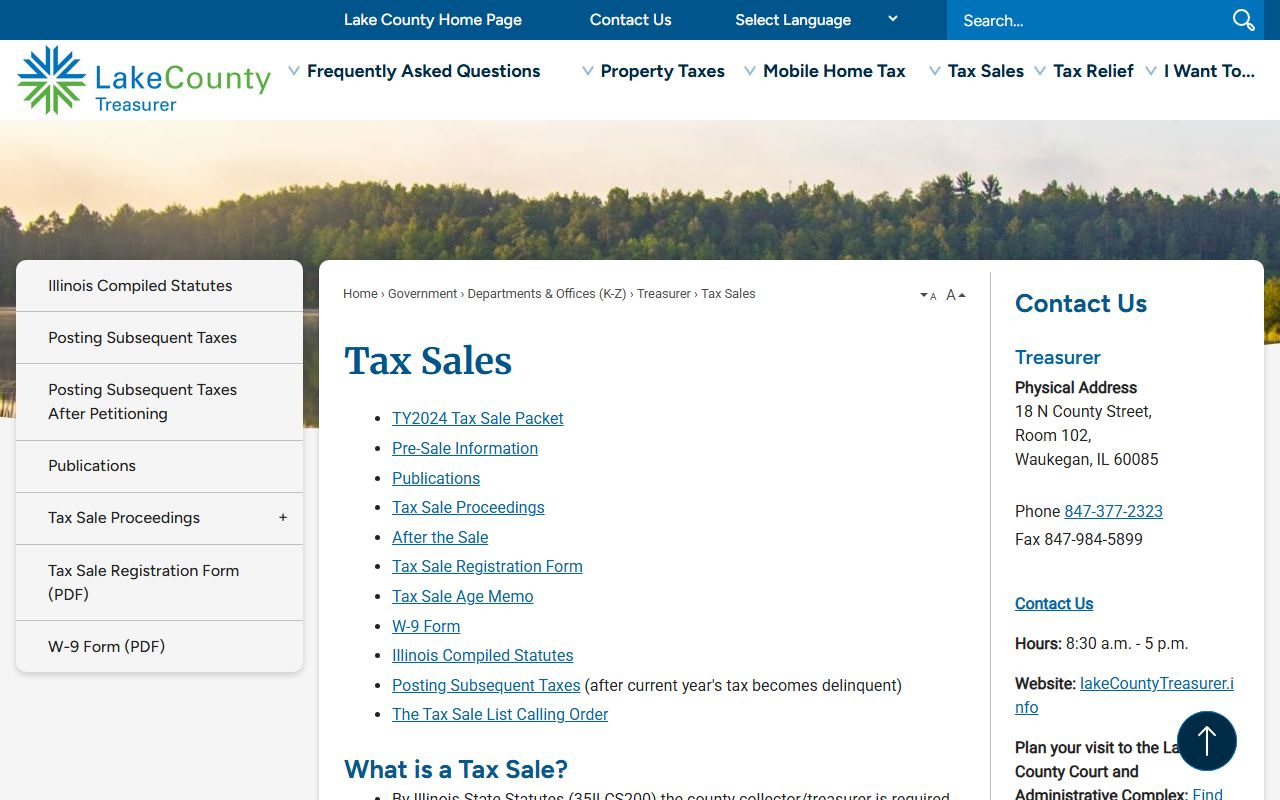
Lake County holds a tax sale each November for properties with unpaid taxes. The Lake County tax sales page has the rules and dates. At the sale, investors bid to pay the delinquent taxes. The property owner then gets a redemption period of two or more years to pay back the amount with interest and penalties. The county clerk handles tax redemption questions at (847) 377-2404.
The Lake County tax sales page outlines the sale process, investor rules, and redemption timelines.
You can also visit LakeSoldTaxes.info for info on properties that have already been sold at tax sale. All sale and redemption activity gets recorded in the Lake County property tax records for that parcel. If you are buying property in Lake County, checking the tax sale history is a smart step before closing.
Where Lake County Property Taxes Go
Your Lake County property tax bill funds schools, parks, libraries, fire departments, and local government. The Lake County tax distribution map shows exactly how your tax dollars are split among the taxing districts that serve your property. Each parcel in the county is covered by a unique combination of districts.
The interactive Lake County tax distribution map breaks down which taxing bodies receive your property tax dollars.
Schools typically take the largest share. In many parts of Lake County, school districts account for 60% or more of the total bill. The county clerk extends the rates each year under 35 ILCS 200, and those rates show up on your tax bill alongside the amount owed to each district. Understanding the breakdown helps you see why your Lake County property tax bill is what it is.
Cities in Lake County
Lake County has many cities, villages, and unincorporated areas. Property tax records for all of them are managed by the county offices in Waukegan. Select a city below for more details on property tax records in that area.
Nearby Counties
Lake County borders these counties. If your property is near a county line, confirm which county it falls in before searching. Property tax records are kept by the county where the property sits.