
Marion County Property Tax Records
Marion County property tax records can be searched through the county treasurer's office in Salem. This southern Illinois county has about 37,000 residents spread across rural farmland and several small towns. The treasurer collects taxes while the supervisor of assessments sets property values. You can look up bills, check payment history, and view assessed values for any parcel using the county's online search tool or by calling the courthouse directly. Both offices are in the Marion County Courthouse in downtown Salem.
Marion County Property Tax Quick Facts
Online Tax Lookup
The Marion County tax search portal lets you search property tax records for free. Enter the owner name, address, or parcel ID number. Results come up right away. You can see the current tax bill, prior year amounts, assessed values, and any exemptions on the parcel.
The portal shows a breakdown by taxing district. Each line lists what goes to schools, roads, fire protection, libraries, and other bodies that levy taxes in Marion County. Several years of history are available, making it easy to track how a property's taxes have changed over time. You do not need to create an account to use this tool.
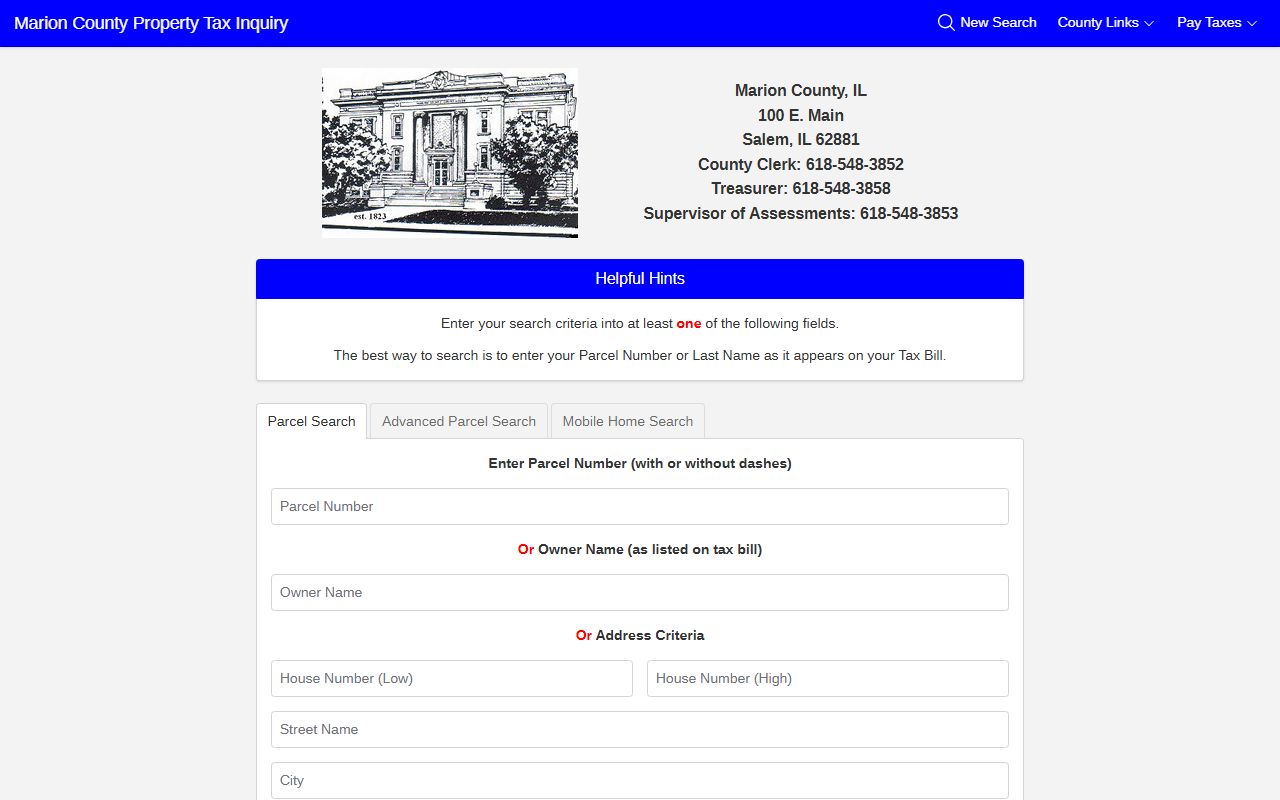
Print your results or save them for your files. The data on the portal matches what the treasurer's office has on record.
Marion County Treasurer
The Marion County Treasurer collects property taxes for all parcels in the county. The office is in the Marion County Courthouse in Salem. Contact the office for current phone numbers and hours. Walk-ins are welcome during business hours.
Pay your bill in person, by mail, or online. For mail payments, send your check with the bill stub to the treasurer's office. Make the check out to the Marion County Treasurer. The office processes thousands of payments each cycle and handles refunds for overpayments. The treasurer also manages the annual tax sale. When taxes go unpaid, the county sells the delinquent amount under rules set by the Illinois Property Tax Code (35 ILCS 200). Interest on late taxes runs at 1.5% per month, and buyers at the sale earn that interest when the owner redeems the taxes.
How Assessments Work
Property in Marion County is assessed at 33.33% of fair market value. A house worth $90,000 on the open market would have an assessed value near $30,000. Township assessors set values initially. The supervisor of assessments office in Salem reviews and adjusts them as needed.
The Illinois Department of Revenue applies an equalization multiplier each year. This factor brings local assessments in line with the statutory 33.33% level across the state. In Marion County, the multiplier shifts from year to year depending on how close local values are to the target. Once equalization is done, the county clerk extends tax rates from each taxing district onto the assessed values. The result is your tax bill.
Property owners who think their assessment is wrong should contact the supervisor of assessments. They can explain how the value was set and what options exist if you want to challenge it.
Exemptions Available
Exemptions lower the taxable value of your property. The most common one in Marion County is the general homestead exemption, which cuts up to $6,000 from the equalized assessed value of an owner-occupied home. You need to apply at the assessor's office to get it.
Seniors 65 and older can claim the senior homestead exemption for an extra $8,000 reduction. The senior freeze exemption locks the EAV for low-income seniors so it does not go up. Disabled persons get a $2,000 break. Disabled veterans may qualify for larger exemptions based on their disability rating. All approved exemptions appear on the Marion County property tax record for each parcel.
Payment Dates and Late Penalties
Marion County taxes are paid in two installments per year. The first is usually due in summer. The second comes in fall. Your bill lists the exact dates. Taxes are paid in arrears, so the 2026 bill covers the 2025 tax year.
Late payments trigger a penalty of 1.5% per month on the unpaid amount. That can pile up quickly if you let it sit. Miss both installments and the property ends up on the delinquent list. The county then sells the unpaid taxes at its annual tax sale. The buyer pays what you owe and collects interest when you redeem. Redemption typically runs two to three years. If the owner fails to redeem, the buyer can seek a tax deed. Every step in this process becomes part of the parcel's Marion County property tax records.
Filing an Appeal
You can appeal your assessment if you believe it is too high. The first step is the Marion County Board of Review. Bring sales data from comparable properties in the area. An independent appraisal also helps your case. The board meets during a window each year, usually in the fall after assessments are published.
If the Board of Review does not rule in your favor, take the appeal to the Illinois Property Tax Appeal Board (PTAB). PTAB hears cases from every county in the state. A successful appeal lowers the assessed value and cuts your tax bill for that year and sometimes future years too. Deadlines matter, so do not wait to file.
Other Property Records
Tax bills are not the only records on file. The Marion County Recorder handles deeds, mortgages, liens, and other documents tied to real estate. When property changes hands, the recorder logs the new deed and the assessor updates ownership in the tax system.
The Illinois Property Tax Public Inquiry website offers statewide tax data. For Marion County, the local portal usually has the most up-to-date figures. The Illinois Property Tax Code sets the legal framework for everything from assessment levels to collection timelines to tax sales across all 102 Illinois counties.
Nearby Counties
If your property sits near a county border, verify which county it falls in before looking up tax records.