
Find Property Tax Records in Stephenson County
Stephenson County property tax records are handled by the treasurer and supervisor of assessments in Freeport. This northwestern Illinois county has about 43,768 residents, with Freeport being the largest city. The treasurer collects taxes and the assessor determines the values that go into each year's bills. You can search any parcel's tax record online through the county portal, or visit the courthouse in Freeport. Both offices keep detailed files on every property, whether it is a home in Freeport, farmland in the country, or a commercial building.
Stephenson County Property Tax Quick Facts
Online Tax Search Portal
The Stephenson County tax search portal is the easiest way to look up property tax records. Search by owner name, address, or parcel number. Results include the tax bill, assessed value, exemptions, and whether taxes have been paid. It is free and open to everyone.
The portal shows each bill broken down by taxing district. You can see exactly how much goes to school districts, the city of Freeport (for parcels inside city limits), fire protection, park districts, library levies, and other bodies. Stephenson County has a number of overlapping taxing districts, especially around Freeport, so the detail is helpful. Several years of data are stored, making it a solid research tool for buyers, owners, or anyone who needs tax history.
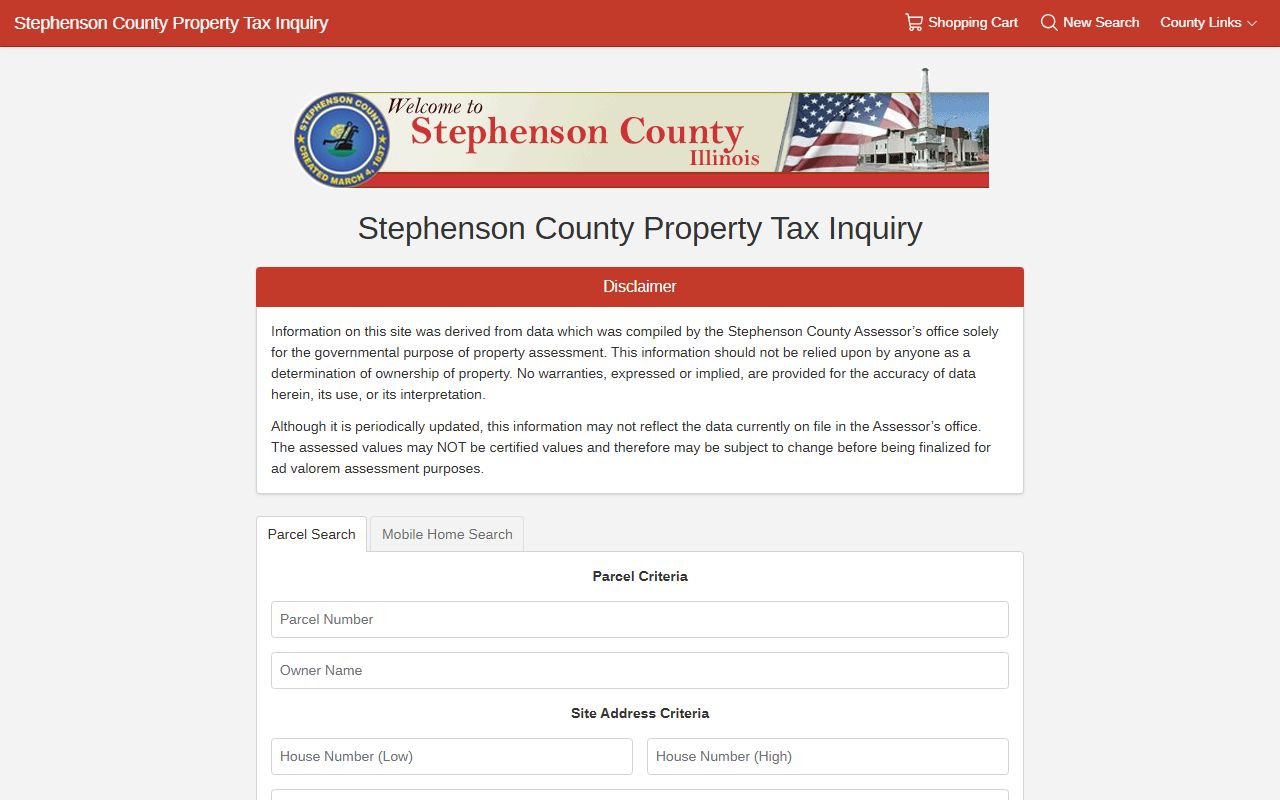
Results can be printed right from the page. The data is the same as what the treasurer's office works with internally.
Stephenson County Treasurer
The Stephenson County Treasurer collects property taxes for all parcels in the county. The office is in the Stephenson County Courthouse in Freeport. Staff handle bill inquiries, payment processing, and receipt requests during normal hours.
Pay in person at the courthouse, by mail, or through the online portal. Mail payments need the bill stub and a check made payable to the Stephenson County Treasurer. The treasurer's office also runs the annual tax sale for delinquent parcels. Per the Illinois Property Tax Code (35 ILCS 200), unpaid taxes pick up interest at 1.5% per month. After the delinquency period, the county sells the tax debt. A buyer pays the amount owed and earns interest when the owner redeems. The redemption period runs two to three years. If the owner does not redeem, the buyer may pursue a tax deed through the courts.
How Property Gets Assessed
Stephenson County assessments follow the 33.33% of fair market value standard. A property worth $140,000 on the market would be assessed at about $46,667. Township assessors set the values. The county supervisor of assessments in Freeport checks them and makes adjustments where needed.
The Illinois Department of Revenue then applies an equalization multiplier. This brings all Stephenson County values in line with the 33.33% statutory target. The multiplier varies by year. Once equalization is finished, the county clerk extends rates from every taxing district onto each parcel's equalized assessed value. The product of the rate and EAV is the tax bill amount.
Farmland around Stephenson County uses a different formula. Agricultural parcels are assessed based on soil productivity rather than market value. This keeps farm taxes tied to what the land produces, not what a buyer might pay for it on the open market.
Exemptions in Stephenson County
Exemptions cut the taxable value and lower the bill. The general homestead exemption removes up to $6,000 from the EAV for homes where the owner lives. Apply at the supervisor of assessments office in Freeport. Seniors 65 and older qualify for the senior homestead exemption, which takes off another $8,000.
The senior freeze exemption locks the EAV for qualifying low-income seniors. A disabled persons exemption of $2,000 is available too. Disabled veterans may get larger reductions depending on their disability percentage. Most exemptions must be filed yearly. Some renew on their own after the first approval. All active exemptions show on the Stephenson County property tax record for each parcel.
Payment Due Dates and Penalties
Stephenson County taxes come in two installments. The first is due in summer. The second in fall. Check your bill for the exact dates. Taxes are paid in arrears. The 2026 bill covers the 2025 tax year.
Pay late and you owe 1.5% interest per month. That starts right after the due date. If both installments go unpaid, the parcel moves to the delinquent list and gets sold at the annual tax sale. Buyers pay the delinquent amount and earn interest when the owner redeems. Redemption takes two to three years. If the owner does not redeem, the buyer can petition for a tax deed to the property. Every step gets tracked in Stephenson County property tax records for the parcel.
Assessment Appeals
If your Stephenson County property is assessed too high, file an appeal. Start with the Stephenson County Board of Review. Bring comparable sales data, photos, or an independent appraisal. The board meets each year in a set window, usually fall. Ask the supervisor of assessments for filing deadlines.
If the Board of Review does not lower your value, you can go to the Illinois Property Tax Appeal Board (PTAB). PTAB hears cases from every county in Illinois. A successful appeal lowers the EAV and the tax bill. The decision becomes part of the property's permanent tax file.
Additional Property Records
Beyond tax bills, the Stephenson County Recorder files deeds, mortgages, liens, and easements. These documents connect to tax records because they track ownership. When property changes hands, the recorder logs the new deed and the assessor updates the owner in the tax system.
The Illinois Property Tax Public Inquiry site offers statewide data from many counties. For Stephenson County, the local portal is usually more current. The Illinois Property Tax Code lays out every rule on assessments, collections, exemptions, and tax sales that applies in Illinois.
Nearby Counties
Properties close to a county border may be in the next county. Always confirm which county your land is in before searching.