
White County Property Tax Search
White County property tax records are kept by the treasurer, assessor, and county clerk in Carmi. This southeastern Illinois county has a population near 13,619 and is bordered by the Wabash River to the east. Anyone can search tax bills, assessed values, and payment history for parcels throughout the county. The treasurer handles collection and the supervisor of assessments determines property values each year. Both offices are in the White County Courthouse and take walk-in visitors during regular hours.
White County Property Tax Quick Facts
White County Online Tax Search
The White County tax search portal is the main tool for looking up property tax records online. Search by owner name, property address, or parcel number. Results display tax bill amounts, assessed values, and whether payments have been made. The site is free and does not require a login.
Here is how the White County tax search tool looks when you first visit the site. Enter any owner name or address to get started.
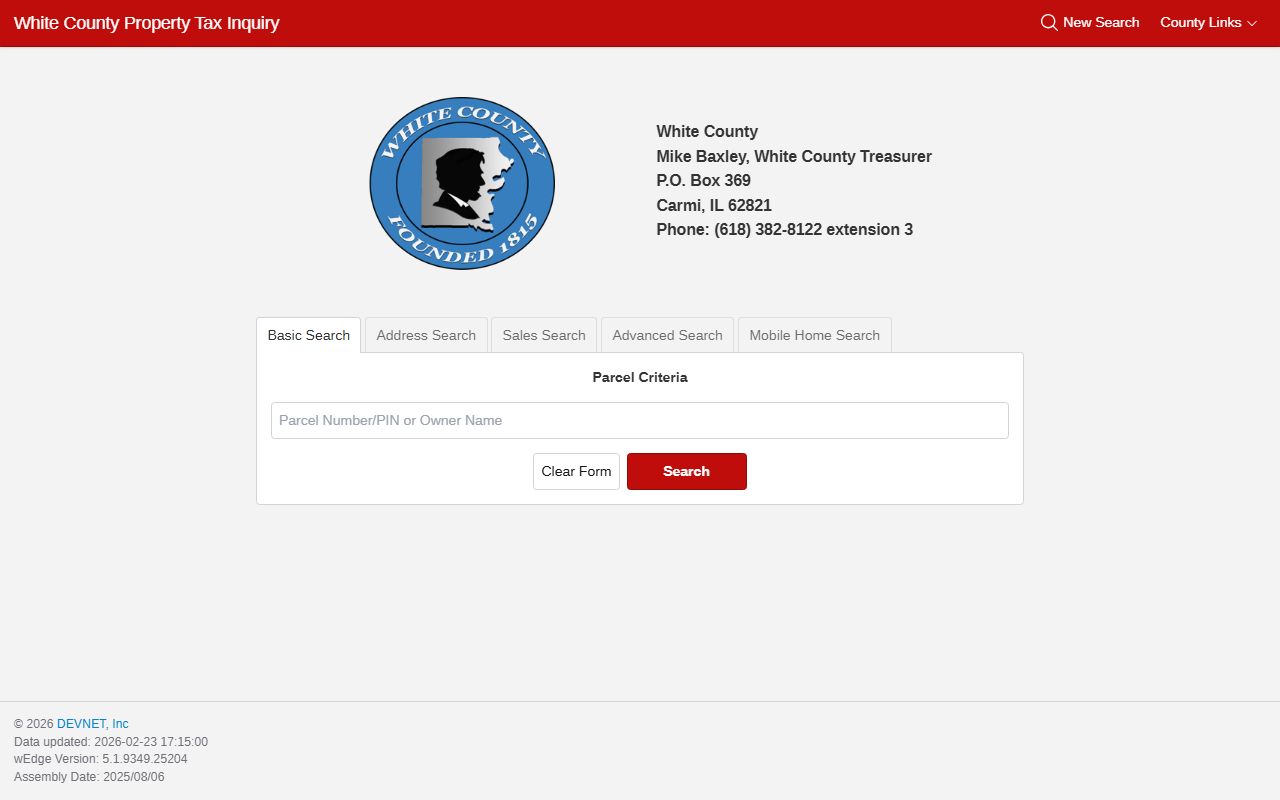
You can view bills from current and past years. The results show what was billed, what was paid, and any outstanding balance. Save or print the page for your own use. If the portal is down, try again later or contact the treasurer directly.
The Illinois Department of Revenue property tax page provides additional context for statewide rules that affect White County bills. It covers rate calculations, equalization factors, and other details.
White County Treasurer
The White County Treasurer collects all property taxes in the county. The office is in the White County Courthouse at 301 East Main Street in Carmi. Call (618) 382-7211 for help with tax bills, payments, or due dates. Staff can look up any record and print copies.
Property taxes in White County are paid in two installments per year. The first is typically due in summer and the second in fall. Dates change annually, so check with the treasurer or the online portal for current deadlines. Under 35 ILCS 200, late payments carry interest at 1.5% per month. That penalty builds fast and makes timely payment worthwhile.
Payments can be made in person with cash, check, or money order. Mail payments work too. Call ahead to verify accepted methods. If you have delinquent taxes, the treasurer can explain what steps are needed.
Property Assessments in White County
The White County Supervisor of Assessments determines property values across the county. Illinois law requires all property outside Cook County to be assessed at 33.33% of fair market value. A home worth $90,000 in White County would have an assessed value of about $30,000. The state then applies an equalization factor to balance values across all counties. Your final tax bill is based on the equalized assessed value, which is the key number in the White County property tax record for each parcel.
If you believe your assessment is too high, appeal to the White County Board of Review. Bring comparable sales data or an appraisal. If the board does not lower the value, you can go to the Illinois Property Tax Appeal Board. Appeal decisions become part of the permanent property tax file for that parcel.
County Clerk and Tax Extensions
The White County Clerk handles tax extensions each year. Local taxing bodies, including school districts, fire districts, and townships, submit their levies to the clerk. The clerk then calculates the rate for each district and extends it across all property in that area. This process produces the individual bills that landowners receive.
Questions about rates on your bill should go to the clerk's office. They can explain which districts are included and how each rate was set. The office is in the courthouse in Carmi. They deal with these questions regularly and can break down the numbers for you.
Exemptions and Tax Relief
White County property owners may qualify for exemptions that reduce the tax bill. The general homestead exemption cuts the equalized assessed value by up to $6,000 for owner-occupied homes. Seniors 65 and older get the senior homestead exemption, worth up to $8,000 more. A senior freeze program locks the assessed value for qualifying low-income seniors so it stays flat.
Disabled veterans may also qualify for relief based on their disability rating. Exemptions are processed through the assessor's office in Carmi. You file the forms, submit proof, and the exemption shows up on your property tax record once approved. Renewal is usually required each year, so stay on top of the deadlines.
Delinquent Taxes and Tax Sales
Unpaid property taxes in White County lead to a tax sale. The county holds one per year. Investors pay the back taxes on delinquent parcels. The owner then has a redemption period, generally two to three years, to repay the amount plus interest and costs. Interest on delinquent taxes runs at 1.5% per month.
Tax sale records are public and show which parcels were sold, amounts paid, and redemption status. Check this history before buying land in White County. The Illinois Property Tax Code lays out the complete rules. Court costs, publication fees, and other charges add up quickly once a sale begins.
How to Search White County Tax Records
There are several ways to find White County property tax records. The online portal is the quickest. Here is what to do:
- Visit the White County tax search site and enter a name, address, or parcel number
- Pick the correct parcel from the results
- View the tax bill, assessed value, and payment history
- Print or save the record
If the portal is down, call the treasurer at (618) 382-7211 or visit the courthouse in Carmi. Staff can look up any record and print copies. For certified copies, go in person. The Illinois Property Tax Public Inquiry tool provides another route for basic statewide tax data including White County.
Property tax records in Illinois are public under 35 ILCS 200. Anyone can search them. You do not need to own the property or give a reason.
Nearby Counties
These counties border White County. If your property is near a county line, confirm you are searching in the correct county. Tax records are held by the county where the land is located.