
Carroll County Property Tax Records
Carroll County property tax records are available through the county treasurer's office in Mount Carroll. Located in the northwest corner of Illinois near the Mississippi River, Carroll County has about 15,500 residents spread across rolling hills and farmland. The treasurer collects property taxes on every parcel in the county, and the supervisor of assessments manages valuation work. You can search tax bills online, review past payments, and check assessed values through the county's search portal or by visiting the courthouse.
Carroll County Property Tax Quick Facts
Online Tax Search Portal
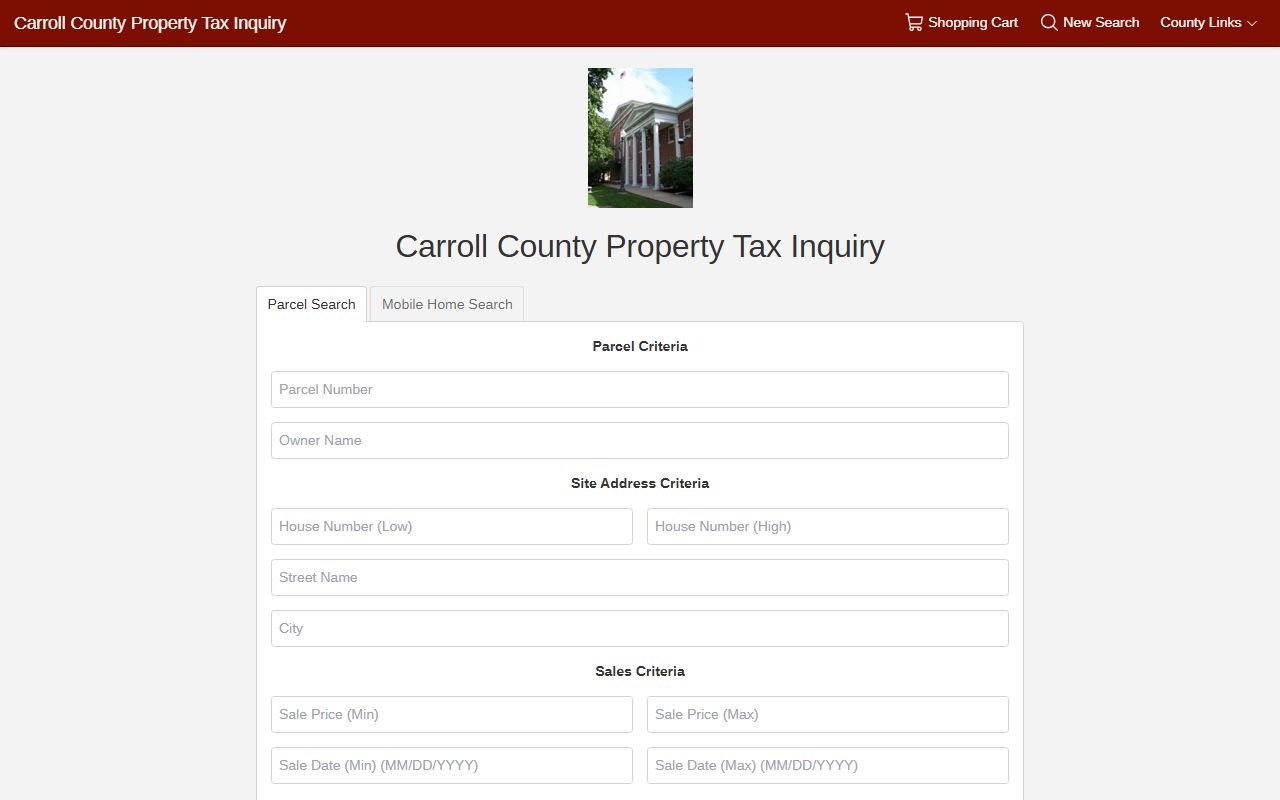
The Carroll County tax search portal lets you look up any parcel in the county. Search by owner name, address, or parcel ID. Each result shows the full tax bill, assessed value, exemptions, and payment history. The portal is free and requires no login.
Tax records on the portal break down each bill by taxing district. You can see the exact amount going to schools, fire protection, road maintenance, libraries, and other local bodies. Carroll County has several small taxing districts, and the breakdown helps you understand where your dollars go. The portal also lets you view bills from previous years. That makes it simple to compare how your taxes have changed. If you need documentation, print or save the page right from the site.
The Illinois Property Tax Public Inquiry tool also has data from Carroll County. It can be useful for comparing properties or checking records from a statewide view.
Carroll County Treasurer
The Carroll County Treasurer handles all tax collection. The office is at the Carroll County Courthouse in Mount Carroll, IL 61053. Call for questions about bills, payments, or due dates. Hours are weekdays during normal business hours.
You can pay taxes in person at the courthouse, by mail, or online. Mail payments should include the stub from your tax bill and a check made out to the Carroll County Treasurer. The treasurer also manages the annual tax sale for delinquent parcels. Per the Illinois Property Tax Code (35 ILCS 200), unpaid taxes get a 1.5% monthly penalty. After enough time passes without payment, the county puts those taxes up for sale. Investors pay the back taxes and earn interest once the owner redeems. The redemption period runs two to three years in most cases. If the owner never redeems, the buyer can seek a tax deed to the property.
Property Assessments
Carroll County assesses property at 33.33% of fair market value. This is the state standard for all Illinois counties except Cook. So a home worth $120,000 would have an assessed value around $40,000. Township assessors do the initial work, and the Carroll County Supervisor of Assessments checks the values for consistency and accuracy.
The state applies an equalization multiplier every year to make sure local assessments match the 33.33% target. The resulting equalized assessed value (EAV) is what tax rates get applied to. Farmland in Carroll County follows a different system. Agricultural land is assessed based on soil productivity, not market sale price. With so much farmland in the county, this productivity-based method affects a big share of total parcels. The assessor's office in Mount Carroll can explain how your specific property was valued if you have questions.
Available Exemptions
Exemptions lower your EAV and cut your tax bill. Carroll County residents can apply for several types through the supervisor of assessments office.
The general homestead exemption removes up to $6,000 from the EAV of an owner-occupied home. Seniors 65 and older can also get the senior homestead exemption, worth an extra $8,000. Low-income seniors may qualify for the senior freeze, which locks the EAV at a base year amount. A disabled persons exemption of $2,000 is available, and disabled veterans can get larger reductions based on disability rating. Some exemptions must be renewed each year. Check with the office in Mount Carroll to make sure yours stays active. Approved exemptions show up on the Carroll County property tax record for each parcel.
Payment Schedule and Late Fees
Carroll County property taxes come due in two installments. The first is usually in summer. The second falls in the fall. Exact dates change each year, so always check your bill. Taxes are paid in arrears, meaning the bill you receive in 2026 is for the 2025 tax year.
Late payments get penalized at 1.5% per month on the unpaid balance. Miss both installments and the parcel goes on the delinquent list. The county then sells those unpaid taxes at its annual tax sale. Tax buyers pay what is owed and collect interest when the owner redeems. Owners typically have two to three years to redeem. If they don't, the buyer can petition the court for a tax deed. All of these steps are part of the Carroll County property tax records for the parcel in question.
Appeals Process
If your Carroll County property seems overvalued, you can challenge the assessment. Start by contacting the Supervisor of Assessments in Mount Carroll. Ask about deadlines and what documents to bring. Comparable sales in the area are the best evidence. A professional appraisal also works.
The Carroll County Board of Review hears local appeals first. They review your evidence and decide whether the value should go up, down, or stay the same. If you're not satisfied with their ruling, you can appeal to the Illinois Property Tax Appeal Board (PTAB). PTAB handles appeals from all 102 counties. A win at any level reduces your EAV and lowers your future tax bills. The Illinois Department of Revenue has guides that explain the full appeal process in detail.
County Clerk and Tax Extension
The Carroll County Clerk takes levy requests from every taxing body and calculates rates. Schools, fire districts, park districts, road districts, and townships all submit their levies. The clerk extends these rates across the assessed values in each district. The result is the total rate that shows on your tax bill.
Tax rates in Carroll County vary based on which taxing districts overlap with your property. A parcel in one school district might have a noticeably different rate than one a few miles away in another district. The clerk's extension work ensures that each district gets the revenue it requested, up to any cap set by law. If a rate on your bill looks wrong, contact the clerk's office in Mount Carroll.
Communities in Carroll County
Mount Carroll is the county seat. Other communities include Savanna, Lanark, Shannon, Milledgeville, and Thomson. None of these towns has a separate tax office. All property tax business goes through the county offices in Mount Carroll. The online portal covers every parcel regardless of which town it sits in.
Nearby Counties
If your property is near a county line, double-check which county it falls in before searching records.