
Coles County Property Tax Records
Coles County property tax records are available through the county treasurer and assessment offices in Charleston. The county has about 46,800 residents and is home to Eastern Illinois University. Property owners can look up tax bills, view assessed values, check payments, and see what exemptions apply to their parcel. The county runs an online search tool that makes it simple to pull up records from any device. Charleston serves as the county seat, and all key offices are in or near the courthouse.
Coles County Property Tax Quick Facts
Search Coles County Tax Records Online
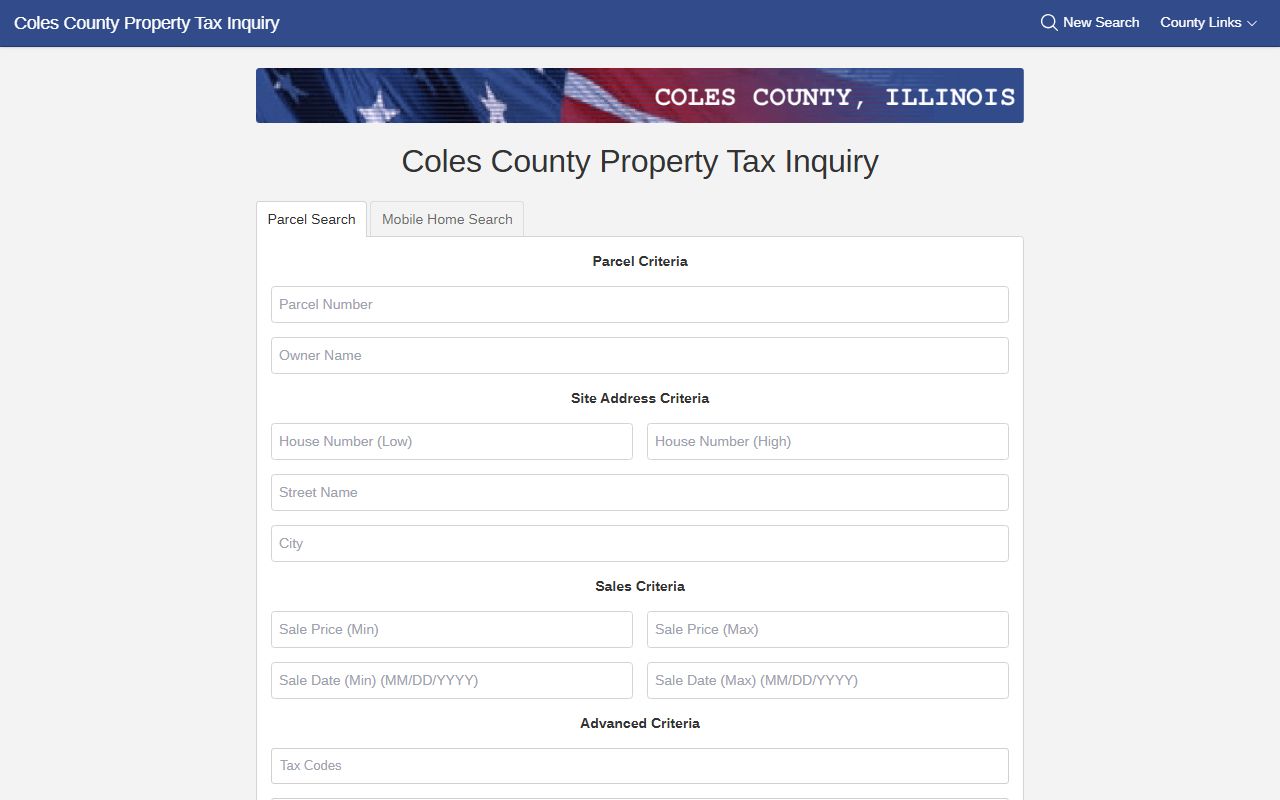
The Coles County tax search portal lets you find property tax records quickly. Enter an owner name, address, or parcel number to get started. Results include the full tax bill, assessed value, payment status, and exemptions. The tool is free and open to the public without any login needed.
The Coles County search portal displays detailed tax bill and assessment data for every parcel in the county.
Each bill gets broken down by taxing district so you can see what goes to schools, fire protection, roads, parks, and other local bodies. This granular detail is part of what makes Coles County property tax records useful for both current owners and prospective buyers. The portal also shows prior years, which lets you track changes in bills and values over time.
Coles County Treasurer
The Coles County Treasurer collects all property taxes. The office is at the Coles County Courthouse, 651 Jackson Avenue, Room 122, Charleston, IL 61920. Call (217) 348-0511 for questions about your bill. The office is open weekdays during normal business hours.
You can pay at the courthouse, send a check by mail, or use the online payment system. Mailed payments need to include the stub from your bill. Make checks payable to the Coles County Treasurer. Under 35 ILCS 200, late property tax payments get charged 1.5% interest per month. That penalty starts the day after the due date and continues to grow until the balance is paid. If taxes go unpaid long enough, they end up at the county's annual tax sale.
At the tax sale, investors buy the delinquent amount. The property owner then has a redemption period to pay back the buyer, plus interest and costs. The period runs two to three years depending on the property type. All tax sale activity becomes part of Coles County property tax records for the affected parcel.
Property Assessment in Coles County
Coles County assesses property at 33.33% of fair market value. A home worth $130,000 would carry an assessed value of roughly $43,333. Township assessors do the initial valuations, and the Coles County Supervisor of Assessments reviews them for consistency. The supervisor's office is in the courthouse in Charleston.
The Illinois Department of Revenue applies an equalization multiplier each year. This adjusts township values so they hit the 33.33% target. After equalization, exemptions lower the final number. Coles County property owners can claim the general homestead exemption ($8,000), senior homestead exemption ($8,000 for those 65+), disabled persons exemption ($2,000), and senior freeze (locks EAV for qualifying low-income seniors). These reductions show up in your Coles County property tax records when you search a parcel.
When Taxes Are Due
Coles County sends out tax bills in two installments. The first is usually due in June. The second comes due in September. Exact dates vary by year. Taxes are paid in arrears. The 2025 tax year bills get mailed and paid during 2026.
Paying on time matters. Interest at 1.5% per month adds up fast. Some homeowners have their mortgage company handle tax payments through an escrow account. If yours does, verify that payments are being made on time by checking your Coles County property tax records. If you pay directly, mark the due dates and do not wait until the last day. The treasurer's office gets busy around deadlines, and mail can be slow.
Appeals Process
Believe your assessed value is too high? You can appeal. Start with your township assessor. If that does not resolve the issue, file with the Coles County Board of Review. You will need evidence. Comparable home sales from your area work well. An independent appraisal or photos of property problems can also support your case.
If the Board of Review does not rule in your favor, you can take the matter to the Illinois Property Tax Appeal Board. PTAB is the state-level body that hears property tax appeals from all 102 counties. A successful appeal means a lower assessed value and a smaller bill. It takes time, but the savings can be worth the effort. Appeal results become part of Coles County property tax records. The Property Tax Code covers all the rules and deadlines you need to follow.
Clerk and Recorder Offices
The Coles County Clerk handles the tax extension. This is where assessed values and tax rates get combined into the dollar amount on your bill. The clerk multiplies each parcel's equalized assessed value (minus exemptions) by the combined rate of all taxing districts that cover the property. Schools, fire protection, roads, parks, and townships all have their own rates.
The Coles County Recorder keeps deeds, mortgages, and liens. These records connect to property tax records by tracking who owns each parcel and whether any claims exist against it. Tax liens from unpaid taxes get recorded here. You can also check Illinois Property Tax Public Inquiry for a broader view of records across the state. For the most current and detailed Coles County information, the local search portal remains the best source.
Nearby Counties
Properties near county borders can cause confusion. Always search in the county where the land is physically located, not where you receive mail.