
Edgar County Tax Records
Edgar County property tax records are managed by the county treasurer and assessment offices in Paris. Situated along the Indiana border in east-central Illinois, Edgar County has roughly 16,500 residents living across wide stretches of farmland and small towns. You can search tax bills, view assessed values, and check payment history for any parcel through the county offices. The treasurer handles tax collection, and the supervisor of assessments sets the property values that drive each year's tax bill for parcels throughout the county.
Edgar County Property Tax Quick Facts
Online Tax Search
Edgar County offers an online tax search tool at edgaril.devnetwedge.com. This portal lets you search by owner name, parcel number, or property address. When it is up and running, results show the full tax bill, assessed value, exemptions, and payment status. The site is free and does not need a login.
Note that this portal may be down at times. If you cannot reach it, try again later or contact the treasurer's office by phone. When the site works, you can view bills from past years and print copies for your files.
For a broader look at property tax data, the Illinois Department of Revenue property tax page covers state-level rules that apply to Edgar County. The Illinois Property Tax Public Inquiry tool also pulls data from counties across the state.
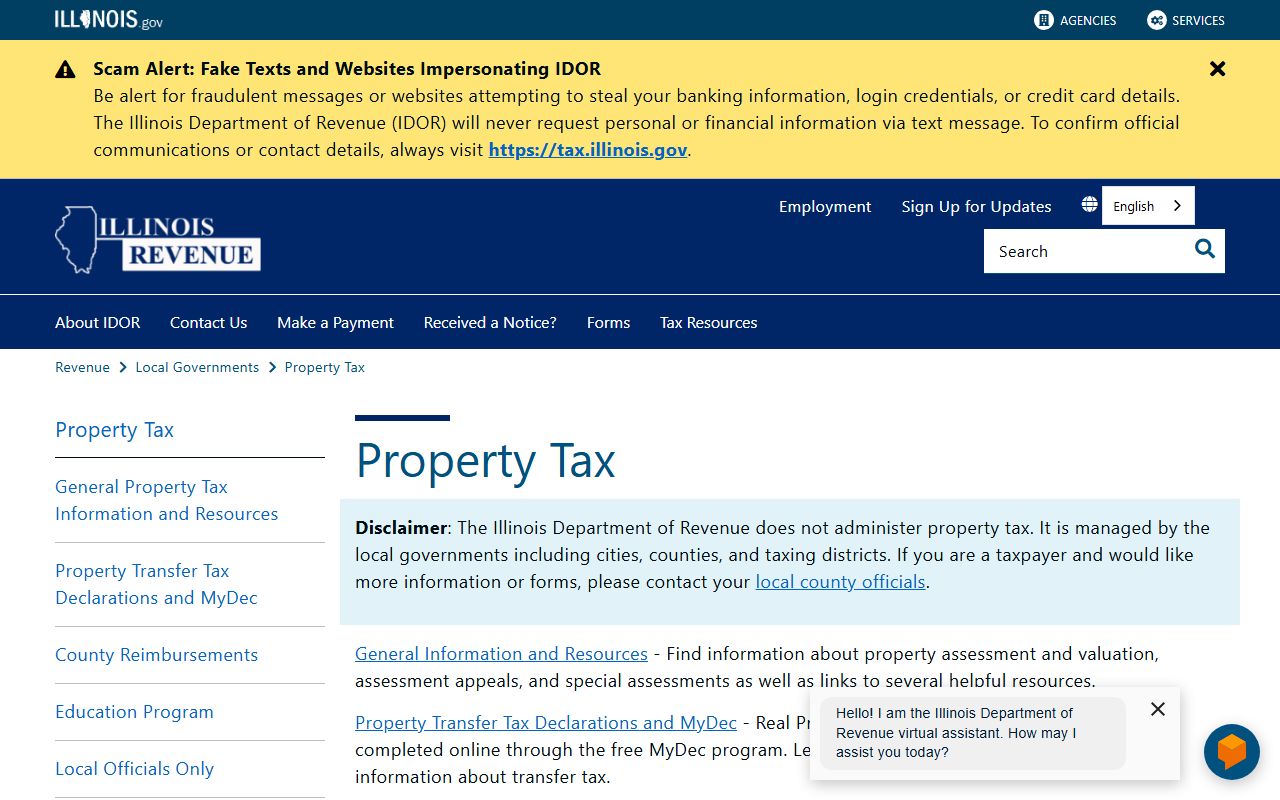
This state resource shows how property tax calculations work across Illinois, including rate details and equalization factors that affect Edgar County bills.
Edgar County Treasurer
The Edgar County Treasurer collects all property taxes. The office is in the Edgar County Courthouse at 115 West Court Street, Paris, IL 61944. You can call (217) 466-7447 for help with bills, payments, or past due balances. Hours are Monday through Friday during regular business hours.
Pay in person at the courthouse, by mail, or through the online system when it is available. For mail payments, include the stub from your bill and make checks payable to the Edgar County Treasurer. The office handles tax sale proceedings too. Under 35 ILCS 200, unpaid taxes accrue interest at 1.5% per month. After a parcel stays delinquent long enough, the county sells those taxes. The owner has a redemption period of two to three years to pay back the full amount plus interest and fees.
Staff can also pull up payment history and print receipts for you. If you need proof you paid, just call or visit with your parcel number.
Assessment Process
All property in Edgar County is assessed at 33.33% of fair market value. A house worth $100,000 would carry an assessed value near $33,333. The state applies an equalization multiplier each year to bring township-level values in line with the statutory target. This multiplier can push your equalized assessed value up or down from the raw assessment.
The Edgar County Supervisor of Assessments manages this work. Township assessors set the initial values, and the supervisor's office reviews them. Since Edgar County is heavily agricultural, farmland gets assessed using a soil productivity formula rather than market sales. This is set by state law and applies to a large portion of the county's parcels. Contact the assessment office at the courthouse in Paris for questions about your specific parcel.
After equalization, exemptions get subtracted. The general homestead exemption reduces the EAV by up to $6,000 for owner-occupied homes. Seniors age 65 and older can claim an additional $8,000 senior homestead exemption. The senior freeze locks EAV for qualifying low-income seniors. A disabled persons exemption of $2,000 is also available. All exemptions show on Edgar County property tax records once approved.
Payment Deadlines and Penalties
Edgar County splits the tax bill into two installments. The first is due in the summer and the second in the fall. Exact dates change yearly. Check with the treasurer's office. Taxes are paid in arrears, so the 2026 bill covers the 2025 tax year.
Late payments draw interest at 1.5% per month on the unpaid balance. That stacks up fast. Missing both installments means the parcel goes on the delinquent list. The county then holds a tax sale. Investors buy the unpaid taxes and earn interest when the owner redeems the property. The redemption period is generally two to three years. These events all become part of the Edgar County property tax record for that parcel.
Appealing Your Assessment
If your Edgar County property seems overvalued, you can file an appeal. Start at the Supervisor of Assessments office in Paris. Bring evidence like comparable sales or a professional appraisal. The staff will walk you through the process and deadlines.
Appeals go to the Edgar County Board of Review first. If you are not satisfied with their decision, the next step is the Illinois Property Tax Appeal Board. PTAB handles cases from all 102 counties in the state. A successful appeal reduces your assessed value and lowers future tax bills. The appeal becomes part of the property's permanent tax record in Edgar County.
County Clerk and Tax Extension
The Edgar County Clerk extends tax rates after the assessment process wraps up. Local taxing districts, like school boards, fire protection districts, libraries, and townships, submit their levy amounts to the clerk. The clerk figures the rate for each district and applies it to the equalized assessed value of parcels within that district. The result is your total tax bill.
Edgar County has a number of overlapping districts. Each one adds a line to your bill. The clerk's office in Paris can answer questions about which districts tax your property and how the rates were set. The Illinois Property Tax Code governs this whole process from assessment through collection.
Nearby Counties
Land near a county line could fall in a neighboring county. Always check which county your property is in before searching tax records.