
Knox County Property Tax Records
Knox County property tax records are managed by the treasurer and supervisor of assessments in Galesburg. The county has about 49,000 residents and covers a wide area of west-central Illinois, with Galesburg as its largest city and county seat. Property owners can access tax bills, assessed values, payment status, and exemption details through the county's online search tool. The treasurer handles collections, while the assessment office sets property values based on fair market conditions and state guidelines.
Knox County Property Tax Quick Facts
Knox County Online Tax Search
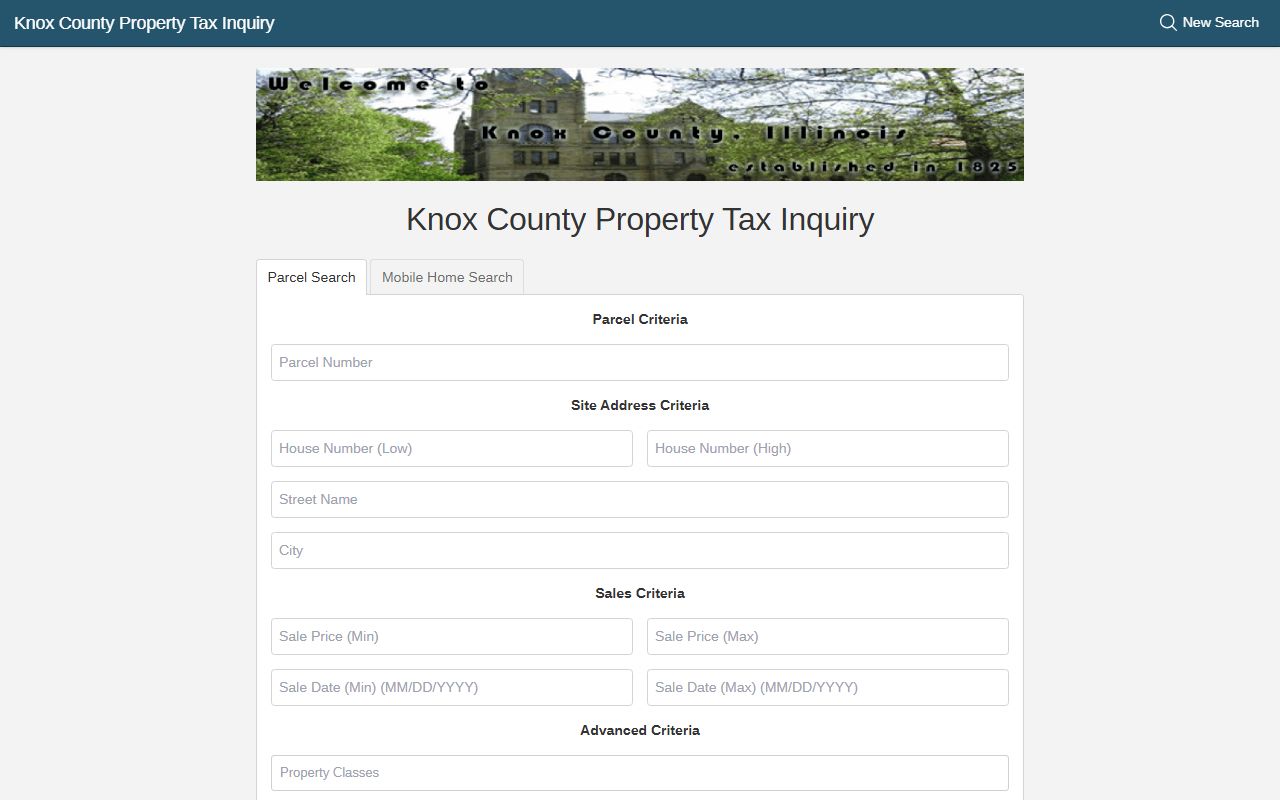
The Knox County tax search portal is the best place to find property tax records. Search by owner name, address, or parcel number. The results page shows your full tax bill, the assessed value, payment history, and any exemptions applied to the parcel. The site costs nothing to use and does not require a login.
The Knox County online portal lets you look up tax records for any parcel in the county, displaying bill amounts and payment details.
Results break down each bill by taxing district. You see the rates for schools, fire protection, roads, libraries, and other local bodies. Knox County property tax records on this site go back multiple years. That makes it easy to track how a property's tax bill and assessed value have changed over time. If you are buying a home in Knox County, checking these records ahead of time gives you a clear picture of what to expect.
Knox County Treasurer's Office
The Knox County Treasurer handles all property tax collections. The office is in the Knox County Courthouse at 200 S Cherry Street, Galesburg, IL 61401. Call (309) 345-3816 for questions about bills or payments.
You can pay in person at the courthouse, by mail, or online through the county portal. The treasurer also runs the annual tax sale for delinquent parcels. Under 35 ILCS 200, unpaid property taxes accrue interest at 1.5% per month from the day after the due date. Miss enough payments, and the county puts the debt up for sale. Tax buyers pay the back amount and earn interest on it. The property owner gets a redemption period, usually two to three years, to pay the total back. All of this activity becomes part of the Knox County property tax records for the affected parcel.
Assessment Process
Knox County assesses property at 33.33% of fair market value. That is the state standard under 35 ILCS 200 for all counties except Cook. So a home with a market value of $100,000 would have an assessed value near $33,333. Township assessors do the initial work, and the Knox County Supervisor of Assessments reviews the numbers.
Each year, the Illinois Department of Revenue calculates an equalization multiplier for each county. The multiplier adjusts assessed values up or down to bring them to the 33.33% target. After that step, exemptions get applied. The general homestead exemption takes up to $8,000 off the equalized assessed value. Seniors 65 and older can get another $8,000. Disabled persons get $2,000 off. There is also a senior freeze for qualifying low-income seniors that locks their EAV at a set level. These all show up when you look at Knox County property tax records for a given parcel.
Farmland in Knox County gets assessed differently than residential or commercial property. The state uses a formula based on soil productivity, not market value. That means farm assessments tend to be more stable from year to year. The county has a lot of agricultural land, so this matters for a big chunk of parcels.
Paying Property Taxes in Knox County
Tax bills come in two installments. The first is typically due in June. The second is due in September. Specific dates shift each year, so check the bill itself or call the treasurer. Taxes are paid in arrears. The bills you pay in 2026 cover the 2025 tax year.
Late payments cost you. Interest runs at 1.5% per month. If you let it go, the county sells the unpaid taxes. That can start a process that leads to loss of the property if you do not redeem in time. Most mortgage lenders collect property taxes through escrow and pay on your behalf. If yours does, check your escrow statement to verify. If you pay directly, put the due dates on your calendar. Staying current keeps your Knox County property tax records clean and free of liens.
Appealing Your Property Assessment
Knox County property owners can appeal their assessed values. Start at the township level with the assessor who set the value. Bring comparable sales data from your neighborhood or an independent appraisal. If the township assessor does not make a change, take the case to the Knox County Board of Review.
Still not satisfied after the Board of Review? File with the Illinois Property Tax Appeal Board. PTAB handles cases from all 102 counties. A successful appeal lowers your assessed value, which means a smaller bill going forward. The timeline can stretch several months. Appeal results get recorded and become part of Knox County property tax records for that property. The Illinois Property Tax Code sets the rules and deadlines for all steps in the appeal process.
County Clerk and Recorded Documents
The Knox County Clerk extends the tax levy. That means the clerk takes each parcel's equalized assessed value, applies exemptions, and multiplies by the combined rate of all taxing districts that cover the parcel. The result is the dollar amount on the tax bill. Knox County has numerous school districts, fire districts, and other local bodies, each with its own levy.
The Knox County Recorder keeps deeds, mortgages, and liens on file. Ownership changes, mortgage filings, and tax liens are all part of the public record. Tax liens from unpaid Knox County property taxes show up here and affect title searches during real estate transactions. You can also use the Illinois Property Tax Public Inquiry site to check records from multiple Illinois counties. For the most up-to-date Knox County data, the local search portal is your best bet.
Nearby Counties
Properties near a county boundary should be searched in the county where the land actually sits. Tax records are kept by the county of the parcel location.