
Search Warren County Tax Records
Warren County property tax records are managed by the treasurer and supervisor of assessments in Monmouth. This western Illinois county has about 16,447 residents and sits between Galesburg and the Mississippi River. The treasurer collects all property taxes while the assessor sets the values that drive each year's bills. You can look up any parcel online for free or visit the Warren County Courthouse in Monmouth. Both offices keep property tax records current through the entire collection cycle.
Warren County Property Tax Quick Facts
Online Tax Search
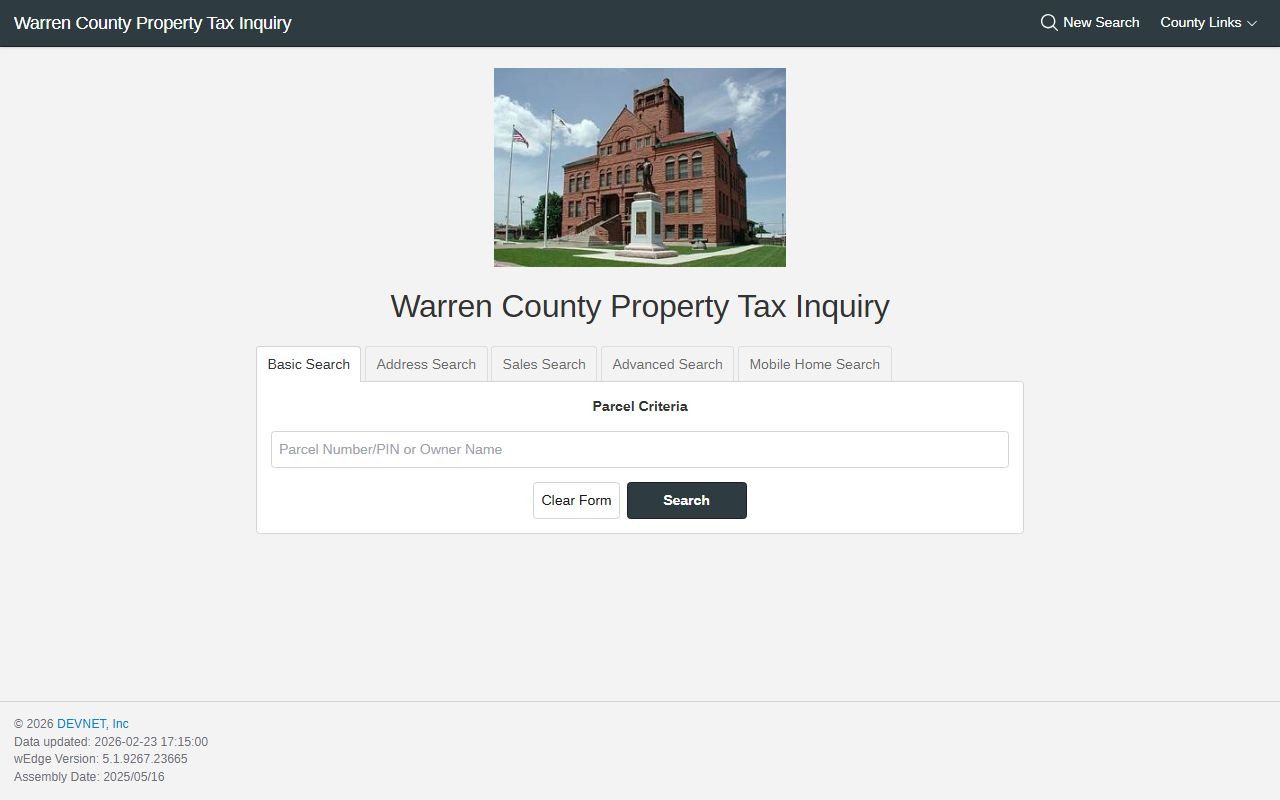
The Warren County tax search portal is a free tool for looking up property tax records. Enter the owner name, property address, or parcel number. The system returns the current tax bill, assessed value, exemptions, and payment details. No login or account is needed.
Results include a line-by-line breakdown by taxing district. You can see what goes to school districts, road funds, fire protection, libraries, park districts, and other taxing bodies. Warren County has a number of these overlapping districts, and the detail helps you understand the full picture. The portal keeps data going back several years. That is useful for tracking changes over time or researching a parcel before a purchase.
Print or save results from the page. The data matches what the treasurer's staff works with day to day.
Warren County Treasurer
The Warren County Treasurer collects all property taxes. The office is in the Warren County Courthouse in Monmouth. Staff are available during business hours to help with bills, payments, and receipts. Call ahead or walk in.
Pay your bill in person, by mail, or through the online system. Mail a check with the bill stub to the treasurer's office. Make it payable to the Warren County Treasurer. The office handles the annual tax sale as well. Under the Illinois Property Tax Code (35 ILCS 200), delinquent taxes accrue interest at 1.5% per month. When a parcel stays unpaid, the county sells the tax debt. A buyer pays the amount owed and earns interest while the owner has a chance to redeem. The redemption period runs two to three years. If the owner does not pay, the buyer can petition for a tax deed.
Assessments
Property in Warren County is assessed at 33.33% of fair market value. A house worth $95,000 on the market would carry an assessed value of about $31,667. Township assessors set the initial figures. The supervisor of assessments in Monmouth reviews and adjusts them as needed.
The Illinois Department of Revenue applies an equalization multiplier each year to adjust Warren County values to the statutory 33.33% level. The multiplier may go up or down depending on how close local assessments already are. After equalization, the county clerk extends tax rates from each taxing district onto the equalized assessed value. That calculation creates the final bill for each parcel.
Farm ground in Warren County is valued differently. Agricultural parcels use a soil productivity formula set by state law. This usually results in lower assessments per acre than market-value methods would produce. Warren County has a lot of farmland, so this method affects a big share of local parcels.
Exemptions
Exemptions reduce the equalized assessed value and cut the tax bill. The general homestead exemption takes up to $6,000 off the EAV for owner-occupied homes. Seniors 65 and older get an extra $8,000 through the senior homestead exemption. The senior freeze locks the EAV for qualifying low-income seniors so their bill does not climb.
Disabled persons can receive a $2,000 reduction. Disabled veterans may qualify for larger exemptions based on disability level. File at the supervisor of assessments office in Monmouth. Most exemptions require yearly renewal. All approved exemptions appear on the Warren County property tax record for each parcel.
Payment Schedule and Late Fees
Warren County taxes come in two installments. The first is due in summer. The second falls in fall. Exact dates are on the bill. Taxes are paid in arrears. A 2026 bill covers the 2025 tax year.
Pay late and interest starts at 1.5% per month on the unpaid balance. Miss both installments and the parcel lands on the delinquent roll. The county sells the debt at its annual tax sale. Buyers pay the owed taxes and collect interest during the redemption period. That window is usually two to three years. If the owner never redeems, the buyer can petition for a deed. Every event in this chain becomes part of Warren County property tax records for the parcel.
Filing an Appeal
If you believe your Warren County property assessment is too high, appeal it. The Warren County Board of Review hears cases during a set period each year, typically in fall. Present comparable sales, an appraisal, or other evidence. Deadlines are strict.
If the board does not lower your value, take the case to the Illinois Property Tax Appeal Board (PTAB). PTAB is a state body that handles appeals from all counties. Winning an appeal reduces the EAV and cuts the tax bill. The decision stays attached to the property's record going forward.
Additional Records
The Warren County Recorder maintains deeds, mortgages, and liens. These connect to the tax system because they show who owns what. When a property changes hands, the recorder files the new deed and the assessor updates the owner name on the tax account.
The Illinois Property Tax Public Inquiry website has tax data from counties across the state. For Warren County, the local portal typically has the freshest numbers. The Illinois Property Tax Code governs every part of the process, from assessments to exemptions to tax sales.
Nearby Counties
Properties near a county border may be in a neighboring jurisdiction. Confirm which county your property is in before searching.