
Lee County Property Tax Records
Lee County property tax records are maintained by the treasurer, assessor, and county clerk offices in Dixon. The county has a population of about 33,869 and covers a wide area in north-central Illinois along the Rock River. You can search tax bills, check assessed values, and review payment records for any parcel in Lee County through the county's online portal or by contacting the offices in Dixon. The treasurer collects taxes while the supervisor of assessments sets the values behind each year's bill.
Lee County Property Tax Quick Facts
Lee County Online Tax Search
The Lee County tax search portal is the main tool for looking up property tax records in Lee County. You can search by owner name, property address, or parcel number. Results show the tax bill, assessed value, and payment history for each property. The site is free and does not require an account.
The Lee County Treasurer's online portal gives you fast access to current and past year tax bill information for parcels across the county.
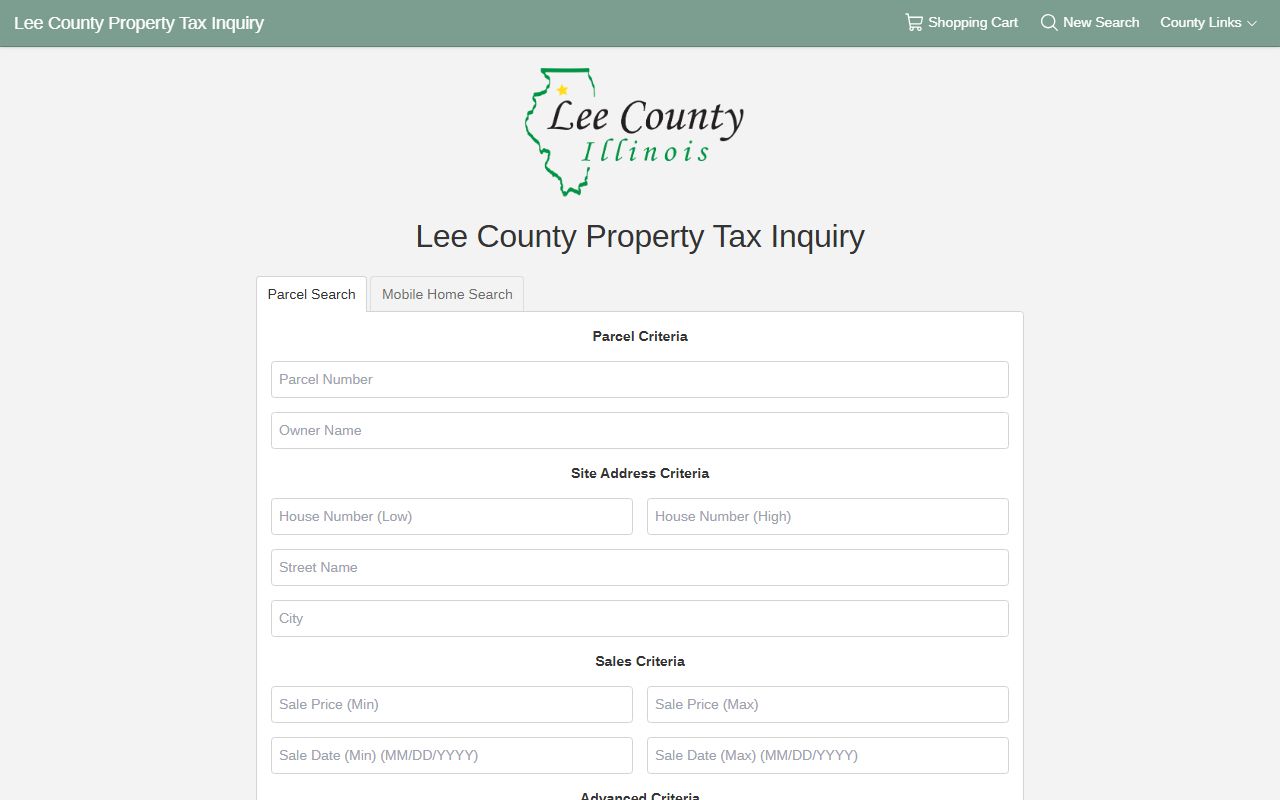
Enter your search terms and click through to the right parcel. You can see what was billed, when it was paid, and any balance that is still owed. The portal stores several years of data, so you can trace the full payment history for a property. If the site seems slow, try again later.
The Illinois Department of Revenue property tax page provides state-level data that applies to Lee County. It covers equalization factors, rate limits, and assessment rules under 35 ILCS 200. This is helpful background when you are trying to understand what is on your bill.
Lee County Treasurer
The Lee County Treasurer collects all property taxes in the county. The office is at 112 E Second St in Dixon, inside the Lee County Courthouse. Phone: (815) 288-4477. Staff there can look up your bill, accept payments, and explain due dates or interest charges.
Taxes in Lee County are paid in two installments. The first is due in the summer and the second in the fall. Exact due dates change each year. If you miss a payment, interest begins at 1.5% per month under 35 ILCS 200. That starts right after the due date and builds quickly. Staying on time is the simplest way to avoid those charges.
You can pay by check, cash, or money order at the office in Dixon. Online credit card payments may be available through the portal, but fees often apply. Call (815) 288-4477 for details about current payment options. If back taxes are owed, the treasurer can walk you through the steps to get caught up.
Assessments in Lee County
The Lee County Supervisor of Assessments determines property values throughout the county. The office is in the courthouse in Dixon. You can call (815) 288-3309 with questions about your property's assessed value.
Illinois law, set out in 35 ILCS 200, requires all property outside Cook County to be assessed at 33.33% of fair market value. A home in Lee County worth $160,000 would carry an assessed value of about $53,333. The Illinois Department of Revenue applies an equalization factor each year to keep values in line statewide. Your tax bill is based on the equalized assessed value, not the raw number from the assessor. Lee County has a lot of farmland, and those parcels are assessed under the farmland assessment law, which uses productivity values instead of market prices. That matters to many property owners in the county.
If your assessment looks wrong, you can appeal to the Lee County Board of Review. Bring comparable sales data or an appraisal. If the local board does not resolve the issue, you can go to the Illinois Property Tax Appeal Board. Appeal records are public and are added to the property tax file.
County Clerk and Tax Rates
The Lee County Clerk extends the tax rates. Each year, local taxing bodies like school districts, fire districts, road districts, and municipalities send their levies to the clerk. The clerk divides each levy by the total equalized assessed value in that district to get the tax rate. Those rates appear on your bill.
If a rate on your tax bill does not make sense, the clerk's office can explain it. They know which district set it and how the math works. The office is in the courthouse in Dixon. This is a part of the process most people do not think about until they see a rate that seems high.
Tax Exemptions in Lee County
Lee County property owners may qualify for exemptions that lower the tax bill. The most common ones include:
- General homestead exemption: up to $6,000 off equalized assessed value for owner-occupied homes
- Senior homestead exemption: up to $8,000 more for owners 65 and older
- Senior freeze: locks the assessed value for qualifying low-income seniors
- Disabled veterans exemption: amount based on disability rating
- Disabled persons homestead exemption: $2,000 reduction
Apply through the assessor's office in Dixon. You need the right forms and proof of eligibility. Once approved, the exemption shows on your property tax record. Most exemptions need annual renewal. Keep track of deadlines so you do not miss out.
Delinquent Taxes and Tax Sales
Unpaid property taxes in Lee County eventually lead to a tax sale. The county holds one each year. Investors bid on delinquent parcels by paying the back taxes. The owner gets a redemption period, generally two to three years under 35 ILCS 200, to pay back the amount plus interest and costs. If the owner does not redeem, the investor can petition for a tax deed.
Tax sale records are public. They show which parcels went to sale, what was paid, and whether the property was redeemed. Check for any tax sale history on a parcel before buying property in Lee County. The Illinois Property Tax Code covers the full rules.
Late interest is 1.5% per month. Court costs, publication fees, and legal charges add up once the sale process begins.
Looking Up Lee County Tax Records
Start with the online portal for the fastest results. You can also visit the treasurer's office in Dixon or call with questions. The Illinois Property Tax Public Inquiry tool is a statewide backup option that includes Lee County data. Under 35 ILCS 200, all property tax records in Illinois are public. Anyone can search them for any reason.
For certified copies, plan to visit the courthouse in person. The staff at the treasurer's or assessor's office can print and certify records when needed. Phone inquiries are fine for basic questions, but for detailed records you may need to go in.
Nearby Counties
These counties are next to Lee County. If your property sits close to a county line, search in the right county. Tax records belong to the county where the land is located.