
Logan County Property Tax Lookup
Logan County property tax records are kept by the county treasurer and assessor in Lincoln, the county seat. The county has a population near 27,713 and sits in the heart of central Illinois. All tax bills, assessed values, and payment records for land and homes in Logan County can be searched through the treasurer's online portal. The treasurer collects taxes while the supervisor of assessments handles the valuation side. Both offices are in the Logan County Courthouse in downtown Lincoln, and most records are open to the public at no cost.
Logan County Property Tax Quick Facts
Logan County Online Tax Search
The fastest way to find Logan County property tax records is through the Logan County Treasurer's tax search portal. This free tool lets you look up any parcel by owner name, street address, or parcel ID number. Results show the current tax bill, assessed value, and whether payments have been made.
The portal pulls data straight from the treasurer's office. You can view bills from past years and see a full payment history for each parcel. No login or account is needed. Just type in what you know about the property and the system does the rest.
Here is what the Logan County tax search portal looks like when you first open it.
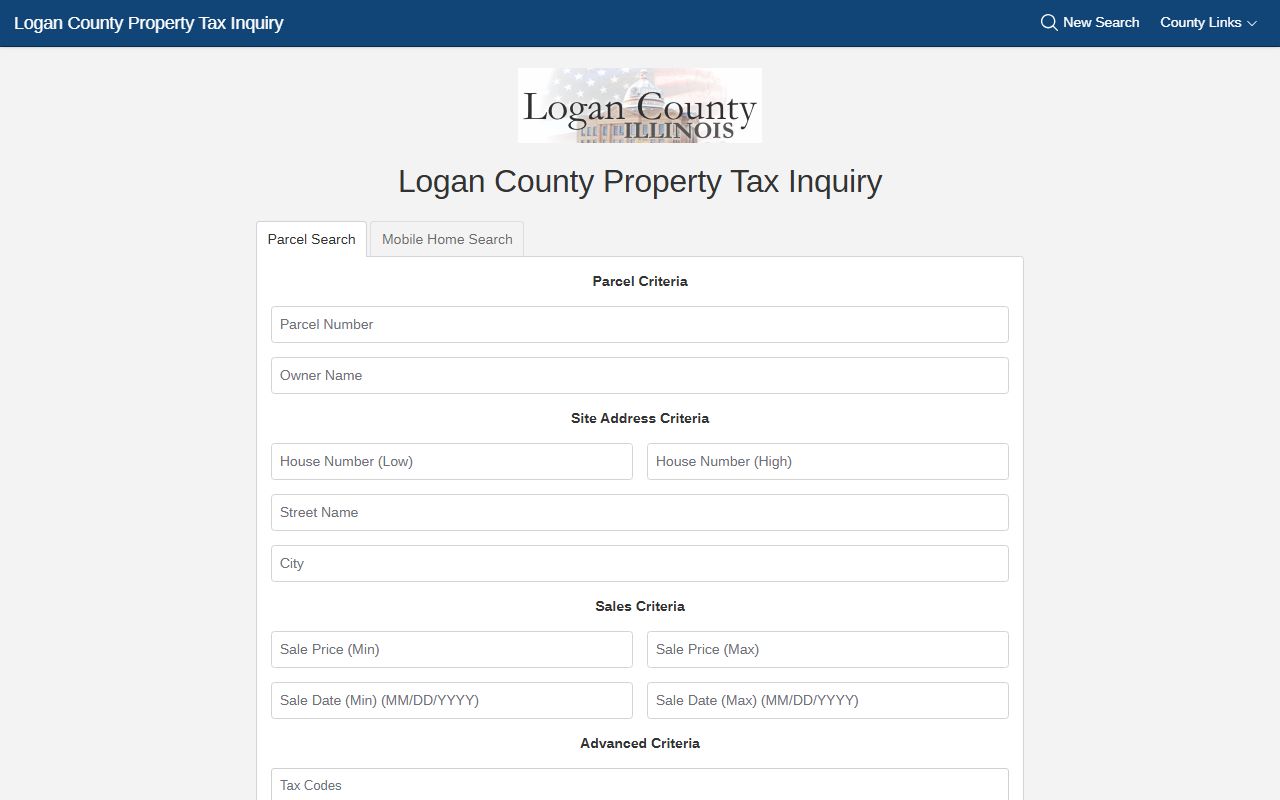
If the site is down or slow, try again later. You can also call the treasurer's office for help with any search.
Logan County Treasurer
The Logan County Treasurer is in charge of collecting all property taxes in the county. The office is in the Logan County Courthouse at 601 Broadway St, Lincoln, IL 62656. You can reach them by phone at (217) 732-4148.
Taxes in Logan County are paid in two installments each year. The first is due in the summer and the second comes in the fall. Exact dates shift from year to year, so check with the treasurer or look at your bill for the right due dates. If you miss a payment, interest kicks in at 1.5% per month under 35 ILCS 200. That rate adds up fast, so staying on top of due dates saves real money.
The treasurer accepts cash, check, and money order for in-person payments. Some payment options may also be available through the online portal. Call ahead to confirm what methods work best for you.
Property Assessments in Logan County
The Logan County Supervisor of Assessments sets the value of all property in the county. This office works out of the courthouse in Lincoln. Assessments follow state law and are set at 33.33% of fair market value. A home with a market value of $120,000 would have an assessed value near $40,000.
After the local assessment, the Illinois Department of Revenue applies an equalization factor. This multiplier adjusts values so that counties across the state are treated fairly. Your final tax bill is based on the equalized assessed value, not the raw number from the assessor. The Illinois Department of Revenue publishes these factors each year.
If you believe your assessment is too high, you have the right to appeal. Start with the Logan County Board of Review. Bring evidence like recent sales of similar homes in the area. If the board does not lower the value to your satisfaction, you can take the case to the Illinois Property Tax Appeal Board. Appeal records become part of the property's tax file.
Tax Exemptions in Logan County
Several exemptions can cut your tax bill in Logan County. The general homestead exemption reduces up to $6,000 from your equalized assessed value. This is for owner-occupied homes. You apply through the assessor's office.
Seniors age 65 and older may qualify for an extra $8,000 reduction through the senior homestead exemption. There is also a senior freeze program that locks your assessed value if your household income falls below a set limit. Disabled persons and disabled veterans have their own exemptions as well. Each exemption has its own form and deadline. Check with the Logan County Supervisor of Assessments for details on what you need to file.
Once approved, exemptions show up on your property tax record. They stay active as long as you meet the rules each year.
Delinquent Taxes and Tax Sales
When property owners in Logan County fall behind on taxes, the county moves toward a tax sale. These sales happen each year. At the sale, investors pay the back taxes on delinquent parcels. The original owner then has a redemption period to pay back the full amount plus interest and costs.
Under the Illinois Property Tax Code, the redemption period is typically two to three years. Interest on delinquent taxes runs at 1.5% per month. Court fees, publication costs, and other charges also get added. Tax sale records are public and are part of the Logan County property tax file for each affected parcel.
If you are thinking about buying property in Logan County, check for any tax sale history before you close. Liens from past sales can complicate the title.
How to Search Logan County Tax Records
There are a few ways to look up property tax records in Logan County. The online portal is the quickest option. Here is what to do:
- Go to the Logan County tax search site and type in a name, address, or parcel number
- Pick the right property from the results list
- View tax bill details, assessed value, and payment history
- Print or save the page for your own records
If you need certified copies or have questions the website cannot answer, visit the treasurer's office at 601 Broadway St in Lincoln. Staff can pull up records and print what you need. The Illinois Property Tax Public Inquiry tool is another option for checking tax data across the state, though the county portal has more detail for Logan County parcels.
Property tax records in Illinois are public. Anyone can search them. You do not need to own the land or give a reason for looking.
Nearby Counties
These counties border Logan County. If a property sits near a county line, make sure you search in the correct county. Tax records are filed where the land is located.